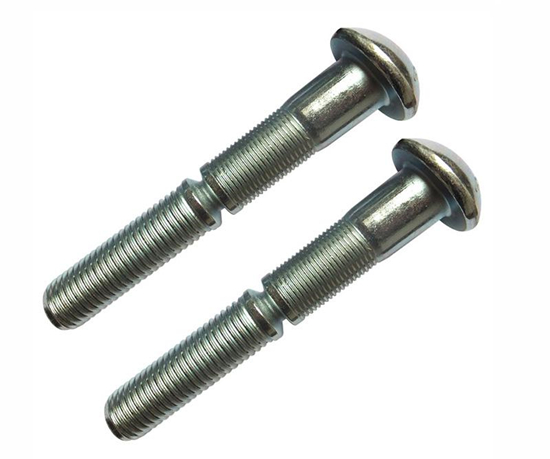
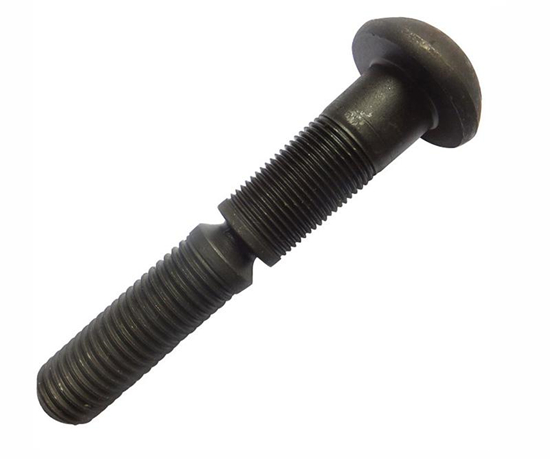
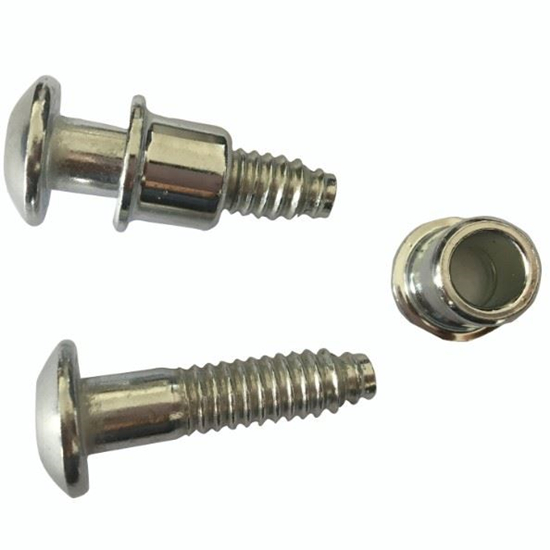
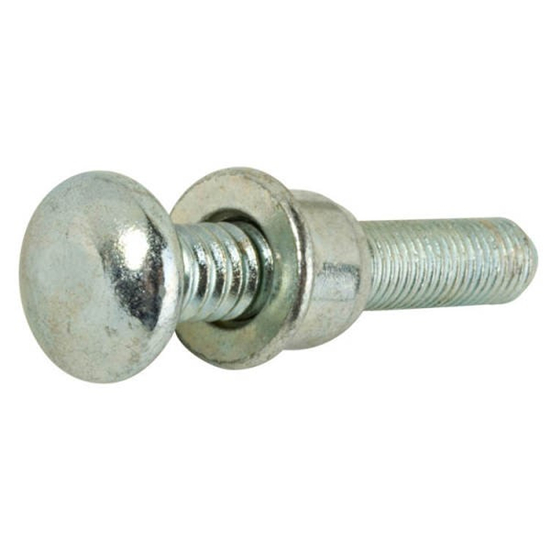
Rivet lock bolts, also known as lockbolts, are two-piece high-strength fasteners consisting of a pin (bolt) with a factory-installed head and a separate collar. During installation, the collar is swaged into the pin’s locking grooves using a specialized hydraulic or pneumatic tool, creating a permanent, 360° mechanical lock. Unlike threaded fasteners, lockbolts cannot loosen under vibration and require no secondary tightening or maintenance.
Available Head Styles
| Head Type | Description | Applications |
|---|---|---|
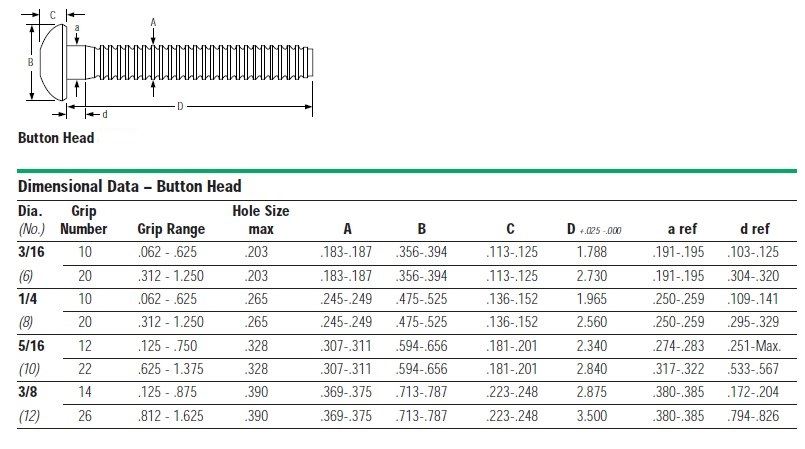
| Button Head | Low-profile, streamlined design; enhances aesthetics and reduces interference | Ideal for applications where space is limited or a clean appearance is desired |
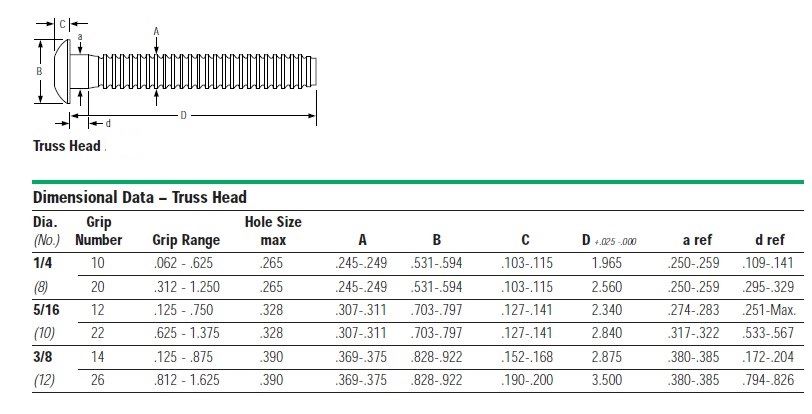
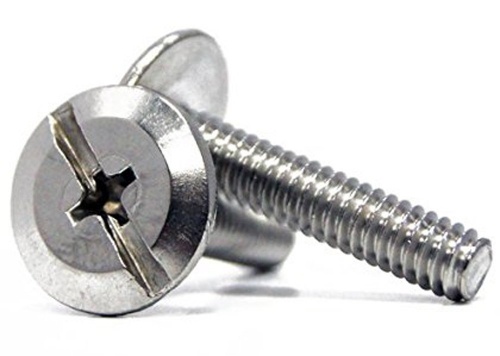
| Truss Head | Larger head surface area; provides better force distribution and minimizes protrusion | Suitable for applications requiring a larger bearing surface to prevent material deformation |
Materials
| Material | Properties | Common Grades |
|---|---|---|
| Carbon Steel | High strength, cost-effective | Various heat-treated grades |
| Stainless Steel | Corrosion resistance, durability | 304, 316 |
Surface Finishes
-
Zinc Plating (clear, yellow)
-
Passivation (stainless steel)
-
Other finishes (Dacromet, Geomet, etc.) available upon request
Mechanical Performance
-
Shear Strength: Typically 30–50% higher than structural blind rivets
-
Vibration Resistance: Exceptional – the swaged collar design prevents loosening even under high-frequency vibration
-
Clamp Force: Uniform and consistent across all installed fasteners
-
Tensile Strength: Superior to conventional bolts of comparable size
Applicable Standards
-
ASTM F2281 – Technical standard for structural lock bolt fasteners
-
ISO 16120 – Mechanical properties of metal fasteners
-
NAS1919 – Aerospace specifications for riveting lock bolts
Common Applications
-
Trucks & Trailers: Frame assembly, chassis components, body attachments
-
Railway Vehicles: Car body frames, bogies, structural connections
-
Heavy Machinery: Excavators, cranes, mining equipment
-
Structural Steel: Bridges, towers, building construction
-
Wind Power: Tower assembly, generator base fixation
-
Refrigerated Containers & HVAC: High-vibration environments

 No products in the cart.