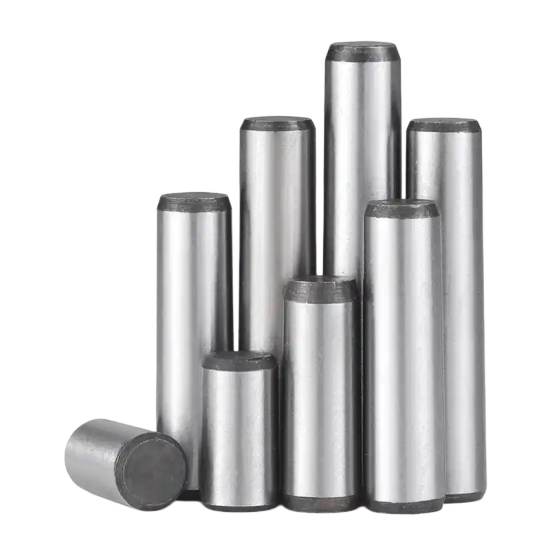
Taper pins, also known as cone pins or conical pins, are tapered cylindrical fasteners with a uniform 1:50 taper ratio along their length. This gradual taper creates a wedging effect when the pin is driven into a matching tapered hole, generating radial friction that locks the pin securely in place. Unlike straight cylindrical pins that rely on an interference fit, taper pins provide self-locking retention while remaining easy to install and remove, making them ideal for applications requiring frequent disassembly and reassembly .
Available Types
| Type | Surface Finish | Application |
|---|---|---|
| Type A (Ground) | Ra = 0.8 μm (precision ground) | High-precision positioning requiring tight tolerances |
| Type B (Turned) | Ra = 3.2 μm (machined) | General-purpose locating where moderate surface finish is acceptable |
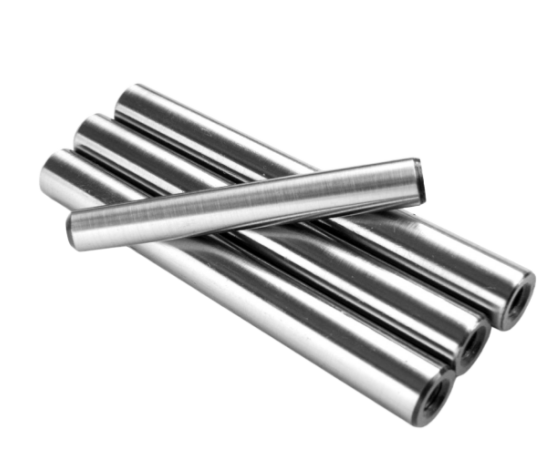
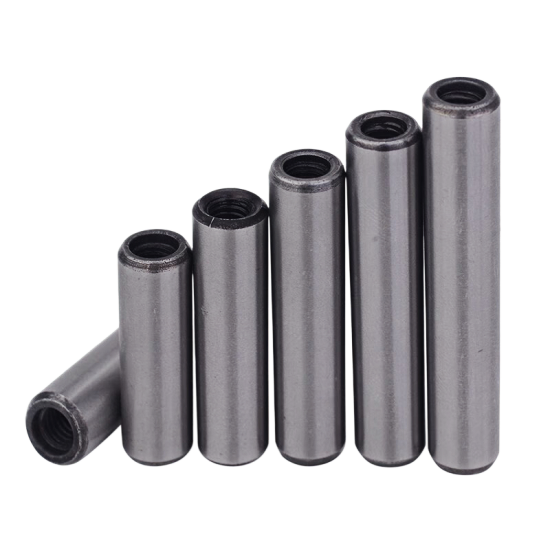
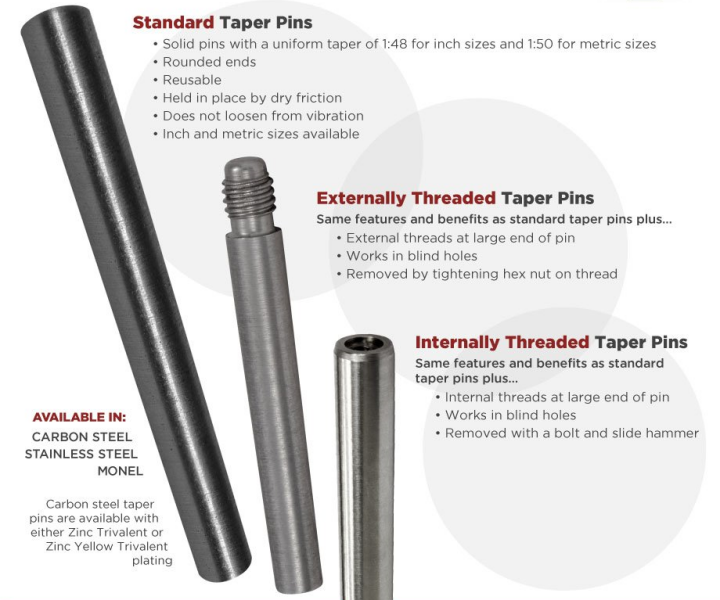
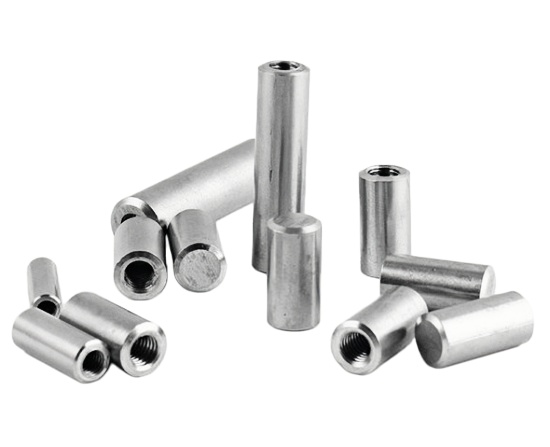
| Internal Thread Taper Pin | Threaded hole at large end | For blind hole applications; threaded end facilitates removal |
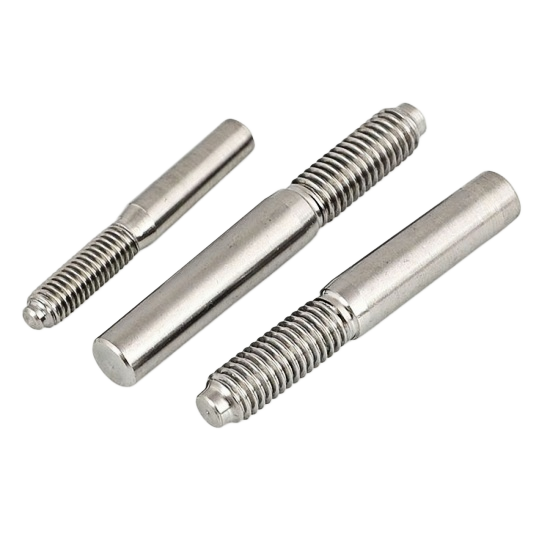
| Threaded End Taper Pin | Threaded portion at small end | For use with nuts in applications subject to vibration or impact |
Applicable Standards
-
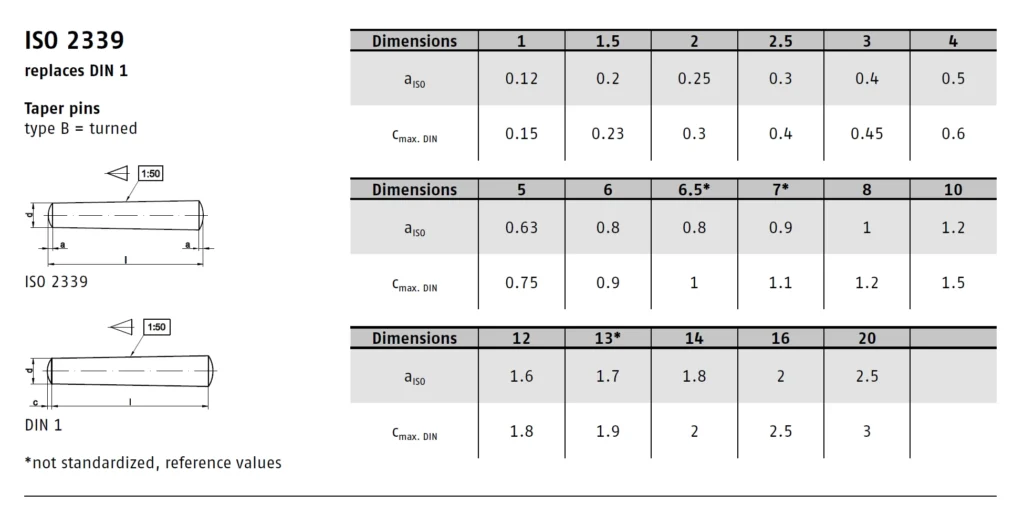
ISO 2339 – Taper pins (unhardened) – international standard
-
DIN 1 – German standard for taper pins (dimensionally equivalent to ISO 2339)
-
GB/T 117 – Chinese national standard for taper pins (equivalent to ISO 2339)
-
GB/T 118 – Chinese national standard for taper pins with internal thread (equivalent to ISO 8736)
Materials
| Material | Properties | Typical Applications |
|---|---|---|
| Carbon Steel | General-purpose strength; available in plain finish | Standard industrial positioning and locating |
| Alloy Steel (40Cr, 42CrMo4) | High strength, wear resistance, heat treatable to 55–60 HRC | Heavy-duty machinery, mold and die locating |
| Stainless Steel (A2/A4 / 304/316) | Corrosion resistance, non-magnetic | Medical equipment, marine, food processing |
| Case-Hardened Steel (20Cr) | Hardened surface with tough core | Applications requiring wear resistance and impact strength |
| Tool Steel | High hardness and wear resistance after heat treatment | Precision mold and die locating pins |
Surface Finishes
-
Plain (as-machined)
-
Phosphate coating (for corrosion protection)
-
Black oxide
-
Passivation (stainless steel)
Common Applications
| Industry | Specific Applications |
|---|---|
| Machine Tools | Positioning of worktables, spindle heads, guide rails, and fixture mounting |
| Mold and Die Manufacturing | Locating and aligning mold bases, core inserts, and cavity plates |
| Automotive | Engine and transmission component positioning, chassis alignment |
| Heavy Machinery | Structural component location, hydraulic system mounting |
| General Industrial Equipment | Pump and valve assemblies, gearbox component positioning, fixture locating |
| Construction Machinery | Excavator and loader component alignment, wear part positioning |

 No products in the cart.