An Overview of Conventional Zinc Plating for Fasteners

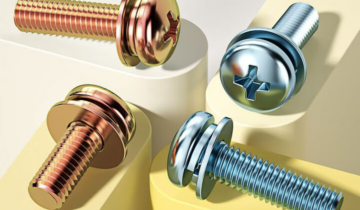
Zinc plating is everywhere. Walk into any hardware store, and you’ll see bins of silver-colored bolts, nuts, and washers—most of them zinc-plated. It’s the default finish for countless fasteners, and for good reason: it’s cost-effective, provides decent corrosion protection, and looks clean. But what exactly is zinc plating? How does it work? And why can some zinc-plated fasteners last for…
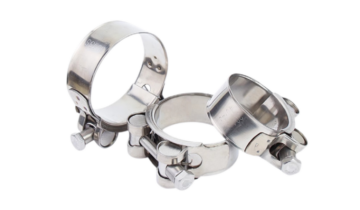
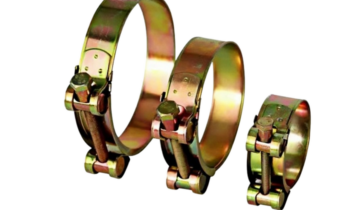
T-Bolt Hose Clamps: Structure, Applications & Materials

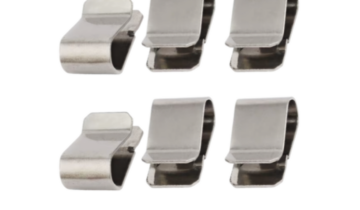
A T‑bolt hose clamp is a heavy‑duty clamping device designed to secure hoses onto fittings or pipes under demanding conditions. It is defined in DIN 3017‑3, which is the part of the DIN 3017 standard family specifically covering bolt clamps (Spannschrauben‑Schellen). Unlike worm‑gear clamps that rely on a perforated band and threaded screw, T‑bolt clamps use a separate bolt and nut mechanism acting on a…

Thread Rolling Screws: Principles, Design & Industrial Applications

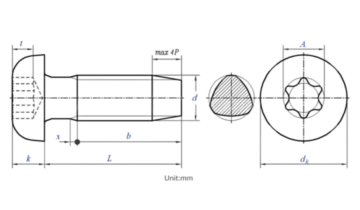
A thread rolling screw is a high‑performance type of self‑tapping fastener that creates its own internal thread by cold‑forming the workpiece material through a precisely engineered, non‑circular cross‑section. Unlike general‑purpose thread forming screws that displace material with standard sheet metal threads, thread rolling screws feature a special lobular (typically trilobular) thread profile that progressively rolls an internal thread into the pilot hole. Most importantly,…

Thread Cutting Screws: Principles, Design & Industrial Applications

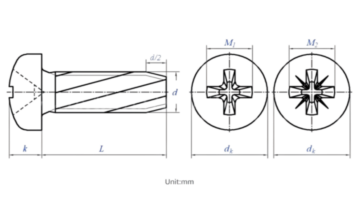
A thread cutting screw is a type of self-tapping fastener that creates its own internal thread by removing material from the workpiece. It functions like a combined screw and tap — the cutting action produces chips or swarf as the screw advances, cutting a precise thread path. Thread cutting screws are specified when materials are too brittle for thread forming, when precise…

Thread Forming Screws: Principles, Design & Industrial Applications

A thread forming screw is a type of self-tapping fastener that creates its own internal thread by displacing material rather than removing it. Unlike thread cutting screws, which produce chips, thread forming screws work through plastic deformation — they push the base material aside and allow it to flow around the screw thread profile. This chipless forming process offers significant mechanical advantages that have made…

Thread Forming Screw Size Chart – Type I Cross Recess, Countersunk Head, Type AB, ASME B 18.6.4 Dimensions

Type I cross recessed flat countersunk trim head tapping screws with Type AB thread forming are a widely specified fastener combining a shallow, smaller‑diameter countersunk head with the industry’s most commonly used thread‑forming point design. The trim head profile sits nearly flush with the workpiece surface but uses a smaller head diameter and lower head height than a standard flat…

Tapping Screw Size Chart – Cross Recess, Countersunk Head, DIN EN ISO 7050 Dimensions

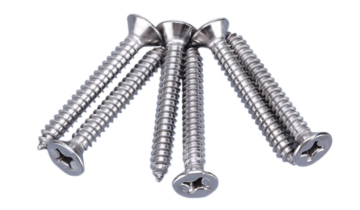
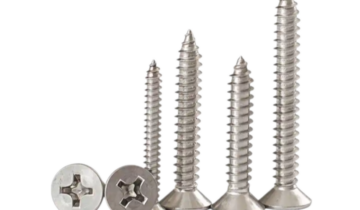
Cross recessed countersunk head tapping screws are designed to form their own mating thread when driven into a pre‑drilled or punched pilot hole, eliminating the need for a separate tapping operation. The countersunk head sits flush with the workpiece surface, providing a smooth finish suitable for applications where a snag‑free profile is required. The cross recess (Phillips or Pozidriv, depending…

Machine Screw Size Chart – Slotted, Countersunk Head, DIN EN ISO 2009 Dimensions

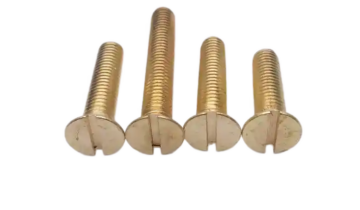
Slotted countersunk head machine screws feature a flat, tapered head designed to sit flush with the workpiece surface when installed into a pre-drilled countersunk hole. The straight slot drive provides a simple and widely compatible method of installation with a standard flat-blade screwdriver. Dimensions and technical requirements are defined by DIN EN ISO 2009, which has superseded the older DIN…

Machine Screw Size Chart – Cross Recess, Countersunk Head, DIN EN ISO 7046 Dimensions

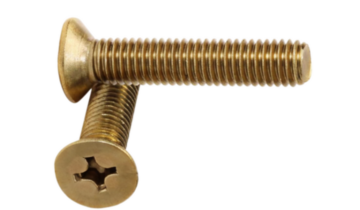
Cross recess countersunk head machine screws are designed to sit flush with the workpiece surface when installed into a pre-drilled countersunk hole. Both parts of the standard specify the same head profile with a 90° countersink angle, ensuring a smooth, snag-free surface. The cross recess centers the driving tool and facilitates both manual and automated assembly. Dimensions and technical requirements…

Close
Close
Sign in
Close
Cart (0)

No products in the cart. No products in the cart.