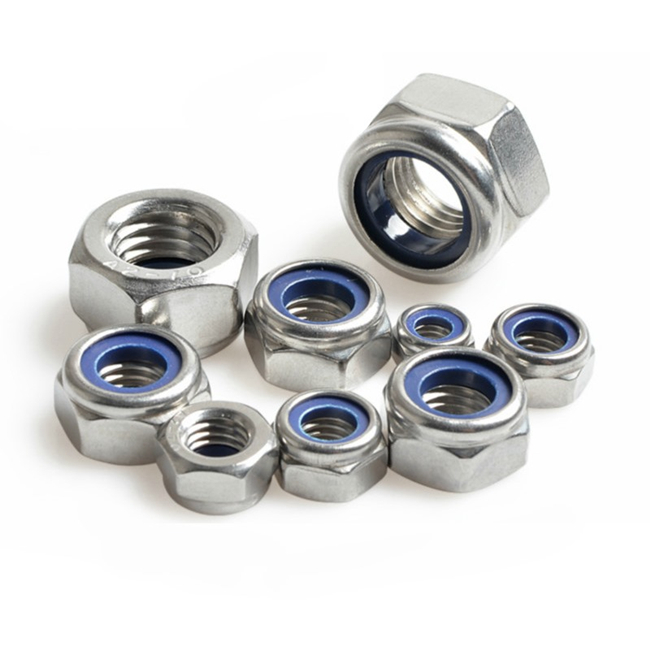
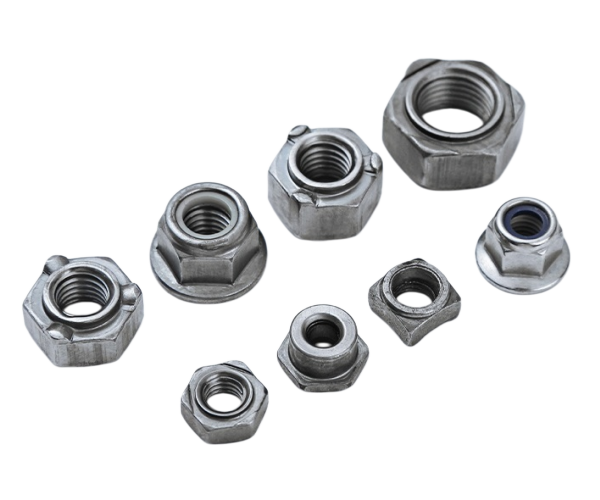
Lock nuts, also known as self-locking nuts, prevailing torque nuts, or stiff nuts, are designed to resist loosening under vibration, torque, and dynamic loads. Unlike standard nuts, they incorporate a locking mechanism that creates friction between the nut and mating threads, ensuring a secure connection that remains tight even in demanding applications.
Available Types
| Type | Description | Locking Mechanism |
|---|---|---|
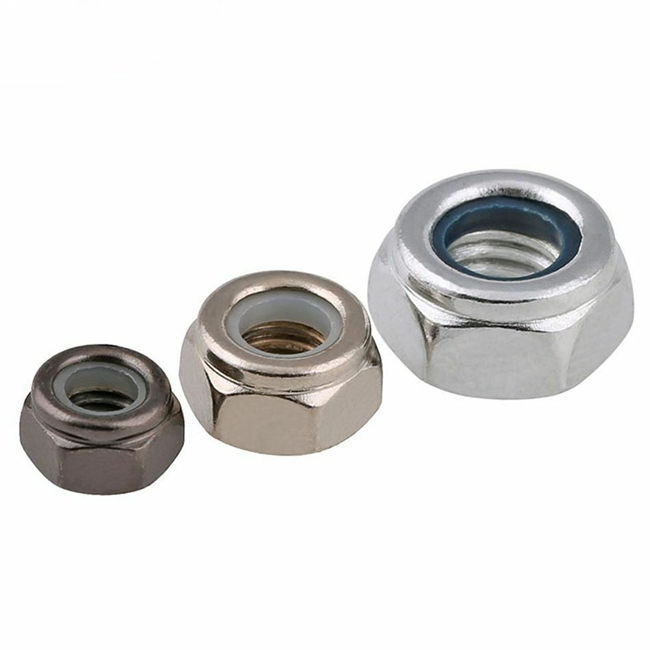
| Nylon Insert Lock Nut (Nyloc Nut) | Threaded hex nut with a polyamide insert at the top that deforms during installation, creating a tight, prevailing torque grip without cutting into threads | Non-metallic insert (nylon/polyamide) |
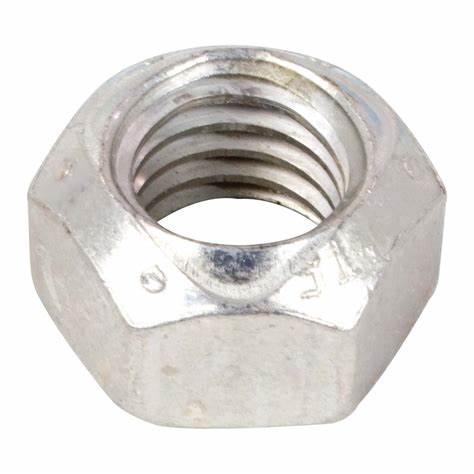
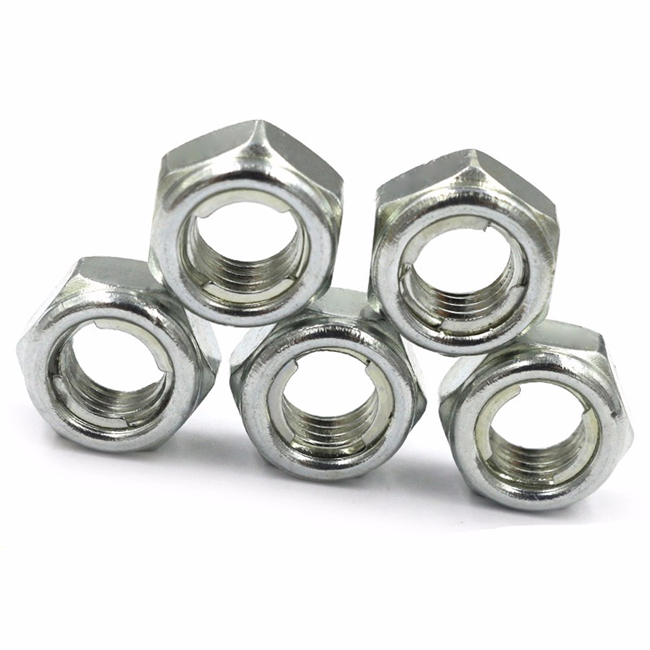
| Stover Lock Nut (Top Lock Nut) | All-metal prevailing torque nut featuring a distorted thread at the top that creates friction against bolt threads; suitable for high-temperature applications | All-metal clamping part |
| K-Lock Nut | Flanged lock nut with built-in serrated washer | Integrated locking flange |
| Reverse Lock Nut | Left-hand thread configuration for specialized applications | Left-hand thread |
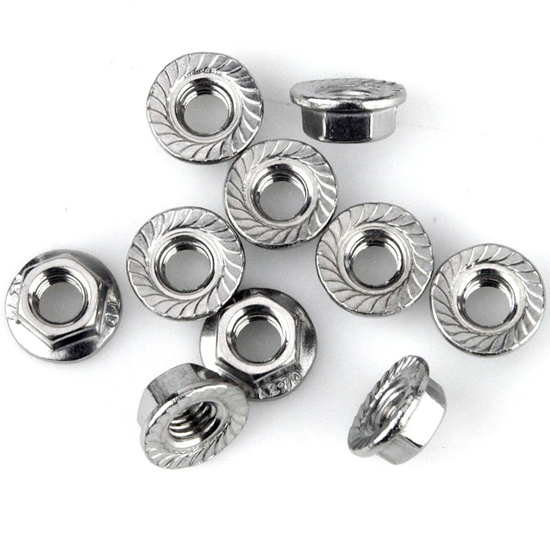
| Flange Lock Nut | Integrated flange distributes load while providing locking function | Flange with serrations or all-metal design |
Nylon Insert Lock Nuts (DIN 985 / DIN 982 / ISO 10511 / ISO 7040 / ASME B18.16.6)
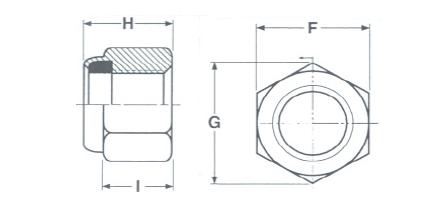
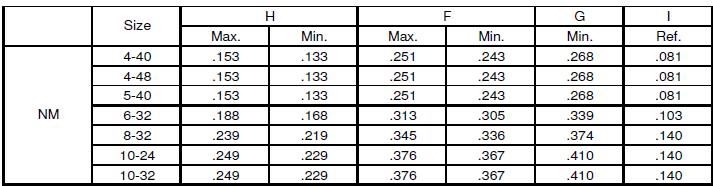
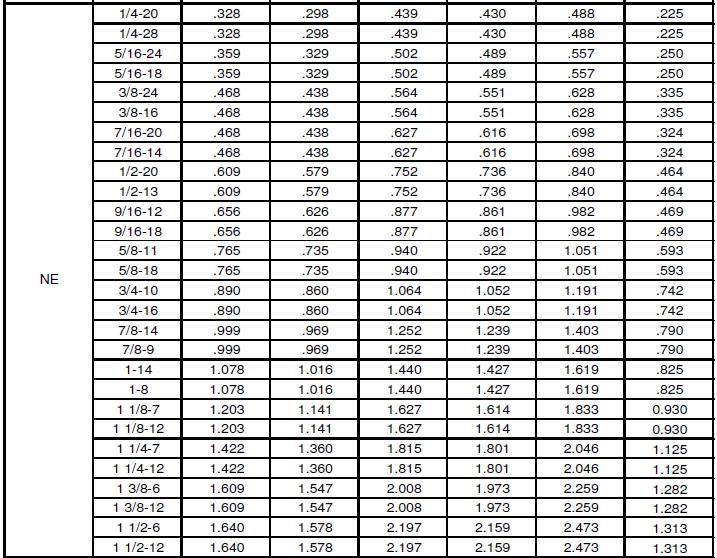
Nylon insert lock nuts feature a polyamide ring firmly attached to one end face. When tightened, the plastic insert compresses around the bolt threads, creating a reliable clamping effect that prevents loosening. Unlike all-metal designs, the nylon insert does not damage bolt threads and can be reused multiple times, though reuse may gradually reduce locking effectiveness.
Stover Lock Nuts (All-Metal) – DIN 980 / ISO 7042
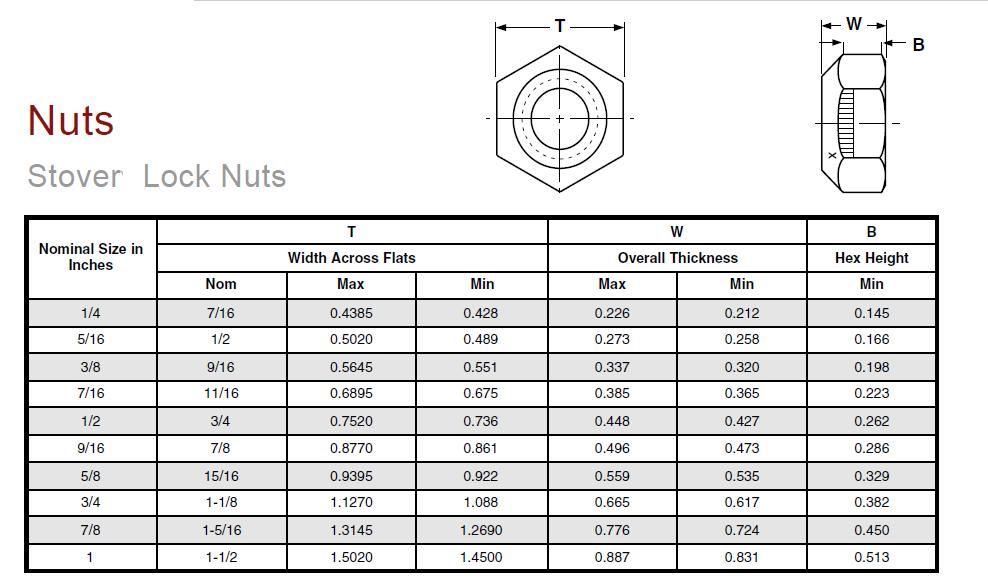
Stover lock nuts are all-metal prevailing torque nuts featuring a specially designed clamping part integrated into the nut body. A metal clamping piece fixed in the inner groove provides consistent clamping effect on the full circumference of the thread. These nuts can withstand higher temperatures than nylon insert nuts (up to 300°C) and are suitable for applications where plastic materials cannot be used.
Flange Lock Nut
Flanged design with integrated bearing surface eliminates need for separate washer while providing locking function. Available in both nylon insert and all-metal configurations.
Applicable Standards
| Standard | Status | Description |
|---|---|---|
| DIN 985 | Withdrawn | Nylon insert lock nuts – thin pattern; replaced by ISO 10511 |
| DIN 982 | Withdrawn | Nylon insert lock nuts – standard height; replaced by ISO 7040 |
| DIN 980 | Withdrawn | All-metal lock nuts (Stover); replaced by ISO 7042 |
| ISO 10511 | Current | Thin nylon insert lock nuts – metric series |
| ISO 7040 | Current | Standard height nylon insert lock nuts – metric series |
| ISO 7042 | Current | All-metal lock nuts – metric series |
| ASME B18.16.6 | Current | Nylon insert lock nuts – inch series |
Materials
-
Stainless Steel 304 (A2) – General corrosion resistance
-
Stainless Steel 316 (A4) – Superior corrosion resistance for marine environments
-
Steel with Zinc Plating – Cost-effective, moderate corrosion resistance
-
Brass – Decorative, non-magnetic, corrosion resistant
Surface Finishes
-
Zinc Plating (clear, yellow, thick-film passivated)
-
Black Oxide
-
Passivation (stainless steel)
-
Chrome Plating
Common Applications
-
Automotive: Engine components, chassis assemblies, suspension systems
-
Machinery: Industrial equipment, vibration-prone assemblies
-
Construction: Structural connections, building and bridge applications
-
Household Appliances: Securing components in various appliances
-
Marine: Stainless steel versions for corrosion resistance
-
Aerospace: High-temperature applications requiring all-metal lock nuts



 No products in the cart.