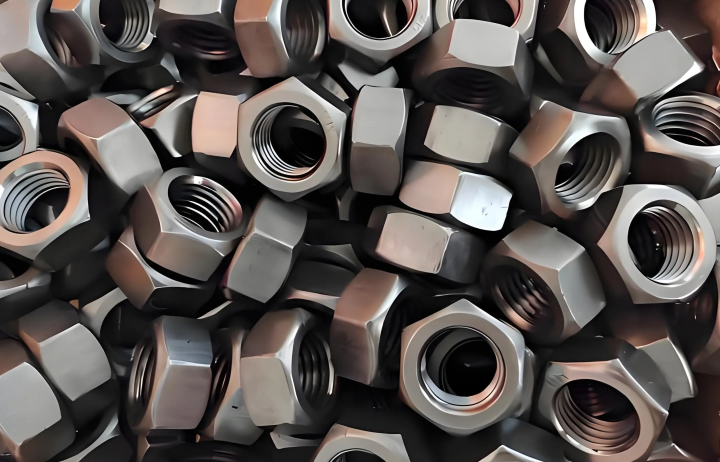
When standard zinc plating isn’t enough for some fasteners — but you need a plated finish (not a coating) — zinc-nickel (Zn-Ni) is the answer. It delivers exceptional corrosion resistance, often reaching 1,000+ hours in salt spray testing, while offering better hardness, heat tolerance, and hydrogen embrittlement control than conventional electroplating. For automotive, aerospace, and other demanding industries, zinc-nickel has become the go-to finish for fasteners that must survive harsh environments.
What Is Zinc-Nickel Plating?
Zinc-nickel plating is an electrodeposited alloy coating consisting primarily of zinc with a controlled percentage of nickel — typically 8–16%, with the optimal range for corrosion resistance being 12–15% nickel. The alloy’s unique microstructure — extremely fine-grained and virtually non‑porous — creates an effective barrier against corrosion. After plating, parts are typically sealed with a passivation layer (often trivalent chromium) and, in many cases, a topcoat that may include integrated lubricating particles to control friction.
Unlike conventional zinc plating (which provides a soft, pure zinc layer), the addition of nickel significantly boosts hardness, thermal stability, and corrosion resistance, making zinc-nickel a preferred choice for severe environments.
Two Main Process Types: Alkaline vs. Acidic
| Aspect | Alkaline Zinc-Nickel | Acidic Zinc-Nickel |
|---|---|---|
| Current efficiency | Lower (40–60%) | Higher (>95%) |
| Deposit uniformity | Excellent — better coverage on complex shapes | Good, but tends to build up on edges |
| Nickel distribution | Very uniform across part | Less uniform; higher nickel on edges |
| Hydrogen evolution | Lower — better for high-strength steel | Higher — requires more careful control |
| Typical applications | High-strength fasteners, chassis parts, safety-critical components | General industrial parts, less demanding hydrogen risk |
| Bath temperature | 20–30°C | 40–60°C |
Both systems can achieve excellent corrosion resistance when properly controlled, but for high-strength fasteners (≥10.9 grade), alkaline zinc-nickel is generally preferred due to its lower hydrogen evolution and more uniform nickel distribution.
Key Advantages of Zinc-Nickel Plating
✅ Exceptional Corrosion Resistance
This is the headline feature. A typical 8–12 μm zinc-nickel coating, when combined with a passivation seal, can withstand over 1,000 hours of neutral salt spray before red rust appears. In some formulations, results can reach 1,500–2,500 hours depending on thickness and passivation. By comparison, conventional zinc plating typically offers only 72–200 hours in similar tests. Zinc-nickel’s corrosion resistance is approximately 4 to 8 times that of pure zinc coatings of equivalent thickness.
✅ Low Hydrogen Embrittlement Risk
Hydrogen embrittlement is a major concern for high-strength fasteners (10.9, 12.9 grades). Unlike some electroplating processes, zinc-nickel systems — particularly alkaline baths — produce significantly less hydrogen during deposition. Studies have shown hydrogen embrittlement rates as low as 1.5% for zinc-nickel plating, compared to over 40% for conventional zinc processes. This makes zinc-nickel a much safer choice for safety-critical components.
✅ High Hardness and Wear Resistance
Zinc-nickel deposits are significantly harder than pure zinc. Typical Vickers hardness ranges from 400–500 HV, compared to approximately 100 HV for standard zinc plating. This increased hardness translates to better resistance to scratching, galling, and mechanical damage during handling and assembly.
✅ Excellent Thermal Stability
Unlike conventional zinc plating, which begins to degrade above 100°C, zinc-nickel coatings maintain their corrosion protection up to 200–300°C without significant loss of performance. This makes them suitable for engine compartments, brake systems, and other high-temperature automotive applications.
✅ Good Paint Adhesion
The zinc-nickel surface — especially when passivated — provides an excellent base for subsequent organic coatings (e-coat, powder coat, paint). This makes it ideal for fasteners that will be painted as part of an assembly.
✅ Environmentally Friendly (Cadmium-Free)
Zinc-nickel plating has been widely adopted as a replacement for cadmium plating, which offers similar corrosion performance but is highly toxic and restricted under regulations such as RoHS, REACH, and ELV. Zinc-nickel provides comparable protection without the environmental and health hazards.
✅ Thread-Friendly Thickness
A typical zinc-nickel coating thickness of 8–12 μm is thin enough to maintain standard thread tolerances without requiring oversized tapping — unlike hot-dip galvanizing (which can add 40–100 μm and necessitates oversize nuts).
Limitations to Consider
⚠️ Hydrogen Embrittlement Risk (Still Present)
While lower than conventional zinc, zinc-nickel plating is not completely hydrogen‑free. For fasteners with tensile strength >1,000 MPa (i.e., property classes 10.9 and 12.9), a hydrogen embrittlement risk remains. To mitigate this, parts must be baked (typically 200°C for 4 hours) within four hours of plating to drive off absorbed hydrogen. The risk is reduced compared to conventional zinc, but cannot be completely eliminated.
⚠️ Higher Cost
Zinc-nickel plating is more expensive than standard zinc plating — typically 1.5 to 2 times the cost. The premium comes from:
-
Higher raw material costs (nickel is significantly more expensive than zinc)
-
More complex process control
-
Additional passivation and sealing steps
-
Required baking for high-strength parts
⚠️ Appearance Variability
The final appearance of zinc-nickel coatings — typically a uniform silver-gray — can vary depending on the specific passivation and topcoat used. While generally acceptable for most applications, it may not match the bright, decorative finish of some conventional zinc plating.
⚠️ Not Recommended for Extreme Wear Applications
For components subject to severe sliding wear or abrasive conditions, thicker, harder coatings (such as electroless nickel or hard chrome) may be more appropriate. Zinc-nickel is a high-performance corrosion barrier, not a heavy-duty wear coating.
⚠️ Requires Specialized Plating Lines
Not every plating shop offers zinc-nickel. It requires dedicated process lines, specialized chemistry, and strict quality controls. Suppliers should be vetted for experience and certification.
Zinc-Nickel vs. Other Common Finishes
| Finish | Corrosion Resistance (Salt Spray to Red Rust) | Hydrogen Risk | Hardness (HV) | Max Temp | Cost | Key Applications |
|---|---|---|---|---|---|---|
| Zinc plating (clear) | 24–72h | High | ~100 | 100°C | $ | Indoor, light duty |
| Zinc plating (yellow) | 72–200h | High | ~100 | 100°C | $ | General industrial |
| Zinc-Nickel (8–12μm) | 1,000–1,500h | Low (with baking) | 400–500 | 200–300°C | $$ | Automotive chassis, engine, brakes, marine |
| Zinc flake (Dacromet/Geomet) | 600–1,000h+ | None | 200–300 | 300°C | $$ | High-strength bolts (10.9/12.9), safety-critical |
| Hot-dip galvanizing | 500–1,000h+ | Low | — | — | $$ | Outdoor structural, large parts |
| Cadmium (legacy) | 1,000h+ | High | — | — | $$$ | Aerospace, military (restricted) |
Applications for Zinc-Nickel Plated Fasteners
Automotive Industry
Zinc-nickel is extensively used in automotive applications where traditional zinc plating would fail prematurely:
| Application | Why Zinc-Nickel? |
|---|---|
| Chassis and suspension | Bolts, nuts, and brackets exposed to road salt, water, and debris — 1,000+ hours salt spray protection ensures long service life. |
| Engine and transmission | High-temperature stability (200–300°C) and corrosion resistance for engine mount bolts, transmission fasteners, and other under‑hood components. |
| Brake systems | Excellent corrosion protection in the presence of brake fluid, road salt, and high temperatures. |
| EV battery fasteners | High-strength fasteners for battery enclosures require low hydrogen embrittlement risk and long-term corrosion resistance. |
| Fastener assemblies | Widely used for bolts, nuts, washers, and clips in demanding underbody and drivetrain applications. |
Other Industries
-
Aerospace: Replacement for cadmium; meets stringent corrosion and weight requirements
-
Industrial equipment: Outdoor machinery, hydraulic components, marine parts
-
Infrastructure: Fasteners for bridges, wind turbines, offshore platforms
-
Marine/Coastal: Excellent resistance to salt spray and high humidity — corrosion rate is approximately 1/5 that of pure zinc
-
Defense: Military-grade fasteners requiring robust, cadmium-free corrosion protection
Summary: Zinc-Nickel Plating at a Glance
| Aspect | Summary |
|---|---|
| What it is | Electrodeposited alloy of zinc + nickel (typically 8–16% Ni, optimal 12–15%) |
| Process types | Alkaline (low hydrogen, uniform) and acidic (high efficiency) |
| Corrosion resistance | 1,000–1,500+ hours salt spray — 4–8× better than zinc |
| Hydrogen embrittlement | Low risk (with baking) — significantly better than conventional zinc |
| Hardness | 400–500 HV — 4–5× harder than zinc |
| Temperature limit | 200–300°C — suitable for engine and brake applications |
| Thread compatibility | 8–12 μm coating — standard thread tolerances, no oversize tapping |
| Key standards | ASTM B841, ASTM F1941, SAE AMS 2461, ISO 4042 |
| Primary industries | Automotive (chassis, engine, brakes, EVs), aerospace, industrial, marine |
| Relative cost | Moderate premium over zinc (≈1.5–2×) — significantly less than cadmium |
| Best for | Severe corrosion environments, high-strength fasteners, automotive underbody and engine applications |
Frequently Asked Questions
Q: Can zinc-nickel be used on 12.9‑grade bolts?
A: Yes, but with precautions. Specify alkaline zinc-nickel, maintain nickel content at 12–15%, apply a passivation seal, and bake immediately after plating. Even with these steps, a small residual hydrogen risk remains. For safety‑critical 12.9 applications, zinc flake coatings (e.g., Geomet, Delta) may be a better choice as they are completely hydrogen‑free.
Q: What is the difference between zinc-nickel and zinc flake coatings?
A: Zinc-nickel is an electroplated coating (applied electrically); zinc flake coatings are mechanically applied (dip‑spin). Zinc-nickel offers a thinner, harder, more uniform appearance; zinc flake provides zero hydrogen embrittlement and is often preferred for 10.9/12.9 grade bolts where maximum safety is required.
Q: Does zinc-nickel require baking for hydrogen embrittlement relief?
A: For fasteners with tensile strength >1,000 MPa (classes 10.9 and 12.9), yes. Baking at 200°C for 4 hours should be performed within 4 hours of plating to drive off absorbed hydrogen.
Q: What colors are available?
A: Zinc-nickel can be passivated in clear (silver), yellow, black, or olive drab using trivalent chromium processes. Clear is most common.
 No products in the cart.