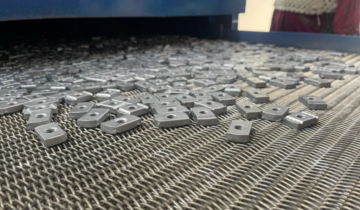
Zinc Flake Coatings: Dacromet, Geomet, Delta for High-Tensile Fasteners

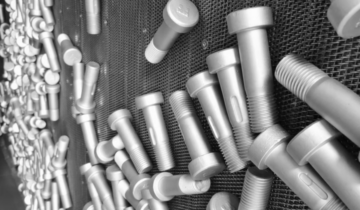
For high-strength fasteners (10.9, 12.9 grades and above), the choice of surface finish isn’t just about corrosion resistance — it’s a safety decision. Traditional electroplating introduces hydrogen, which can cause delayed brittle fracture in high-tensile steel. Zinc flake coatings solve this problem entirely. They are applied non-electrolytically, eliminating hydrogen embrittlement risk while delivering exceptional corrosion protection — often exceeding 1,000…
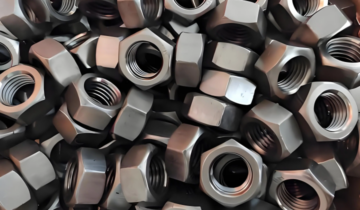
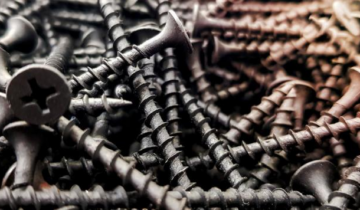
Zinc-Nickel Plating for Fasteners: The Premium Choice for Extreme Corrosion Protection

When standard zinc plating isn’t enough for some fasteners — but you need a plated finish (not a coating) — zinc-nickel (Zn-Ni) is the answer. It delivers exceptional corrosion resistance, often reaching 1,000+ hours in salt spray testing, while offering better hardness, heat tolerance, and hydrogen embrittlement control than conventional electroplating. For automotive, aerospace, and other demanding industries, zinc-nickel has…

Phosphating for Fasteners: The Cost-Effective Solution for Lubrication and Paint Base

When you need a fastener finish that won‘t break the bank, plays well with paint, and gives you consistent torque control, phosphate coating (often called phosphating) is often the answer. Unlike zinc plating (which deposits metal) or black oxide (which simply discolors the surface), phosphating creates a crystalline conversion layer that chemically bonds to the steel. It’s not the most corrosion-resistant finish on the market, but for…

Black Oxide for Fasteners: When Looks Matter More Than Protection

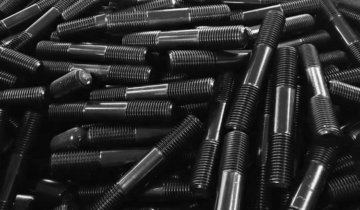
If zinc plating is the workhorse of fastener finishes, black oxide is the dress shoe—stylish, sleek, and perfectly suited for certain occasions, but not something you’d take hiking through the mud. Black oxide (also called blackening or bluing) is one of the oldest surface treatments for steel fasteners. It’s instantly recognizable by its deep black or blue-black appearance, often seen…

Hot-Dip Galvanizing for Fasteners: Heavy-Duty Corrosion Protection

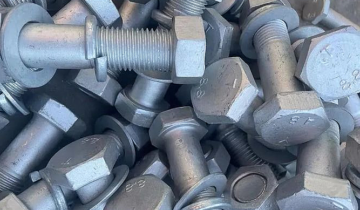
When fasteners need to survive decades outdoors—on transmission towers, highway guardrails, or coastal structures—hot-dip galvanizing is the finish of choice. Unlike the thin zinc layer applied by electroplating, hot-dip galvanizing creates a thick, metallurgically bonded coating that can protect steel for 30 to 70 years, depending on the environment. What Is Hot-Dip Galvanizing? Hot-dip galvanizing is a process where steel…

An Overview of Conventional Zinc Plating for Fasteners

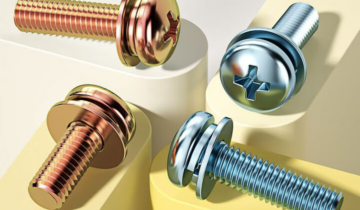
Zinc plating is everywhere. Walk into any hardware store, and you’ll see bins of silver-colored bolts, nuts, and washers—most of them zinc-plated. It’s the default finish for countless fasteners, and for good reason: it’s cost-effective, provides decent corrosion protection, and looks clean. But what exactly is zinc plating? How does it work? And why can some zinc-plated fasteners last for…

Achieving 240H Salt Spray Resistance: Advanced Surface Finishes for Fasteners

When 240 hours of salt spray resistance is demanded for a bolt, ordinary zinc plating won’t suffice. This level of corrosion protection requires specialized surface finishes engineered for severe environments—marine, automotive underbody, industrial, or coastal applications. Here are the four most reliable surface treatments that consistently achieve 240+ hours of salt spray resistance, with detailed performance data and application guidance.…

Close
Close
Sign in
Close
Cart (0)

No products in the cart. No products in the cart.