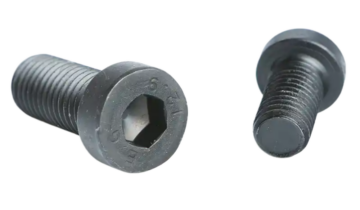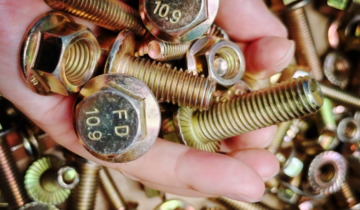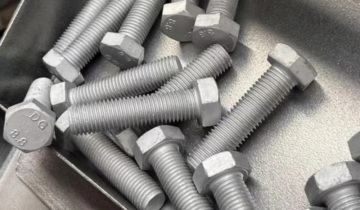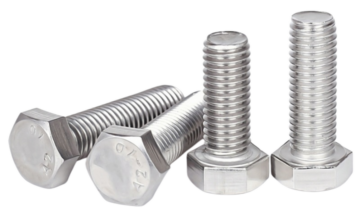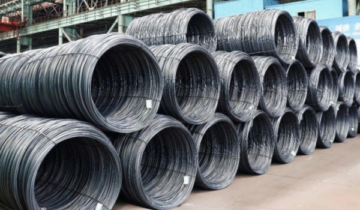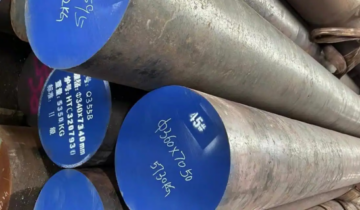
Chinese Alloy Steels for High-Strength Fasteners

When a fastener needs to achieve property classes 10.9 or 12.9, plain carbon steel often reaches its limit. The required strength, hardenability, and toughness demand alloy steels — materials with carefully controlled additions of chromium, molybdenum, manganese, boron, or titanium. In the Chinese fastener industry, several alloy steel grades have become the standard choices for high-strength bolts, studs, and screws. This article covers…

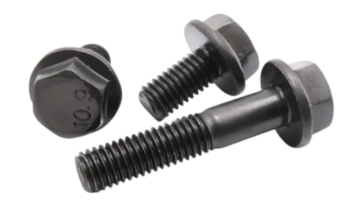
Hydrogen Embrittlement: Why It Matters for High-Strength Bolts

Hydrogen embrittlement (HE) is one of the most insidious failure modes for high-strength bolts. It doesn’t announce itself with visible warning signs. It doesn’t cause bolts to stretch or deform before breaking. Instead, a bolt can be perfectly tightened, pass all quality checks, and then — hours, days, or even weeks later — snap without warning under a load well…

High-Tensile Bolts (8.8 / 10.9 / 12.9): A Complete Comparison

When engineers search for high-strength bolts or high-tensile bolts, they typically mean metric property classes 8.8, 10.9, and 12.9 — the three most common grades of quenched and tempered steel bolts defined by ISO 898-1. Choosing the right grade can mean the difference between a secure, long-lasting joint and a sudden, catastrophic failure. This article provides a side-by-side comparison of Class 8.8, Class 10.9, and…

Class 12.9 Bolts (Grade 12.9): Mechanical Properties, Specs & Applications

When engineers need the absolute maximum strength from a metric fastener — without increasing bolt diameter — they turn to Class 12.9 bolts. These ultra-high-strength fasteners represent the highest commonly available property class in ISO 898-1, delivering 1,200 MPa tensile strength and 1,080 MPa yield strength. They are the specialists of the fastener world: not for everyday use, but indispensable when…

Class 10.9 Bolts (Grade 10.9): Mechanical Properties, Specs & Applications

When Class 8.8 bolts reach their strength limit, engineers turn to Class 10.9 bolts. These high-strength metric fasteners represent the next tier in ISO 898-1 property classes — delivering 25% higher tensile strength than 8.8 and forming the backbone of automotive powertrains, structural steel connections, and heavy machinery. But what exactly does “Class 10.9” mean? How much stronger is it than…

Class 8.8 Bolts (Grade 8.8): Mechanical Properties, Specs & Applications

When engineers and procurement professionals search for Class 8.8 bolts — also widely known as Grade 8.8 bolts — they are looking for a reliable, cost‑effective metric fastener. Both terms refer to the same ISO strength specification (ISO 898‑1). This guide covers everything you need to know about this most widely used metric bolt grade, whether you call it Class 8.8 or Grade 8.8.…

A2-70 vs. A4-70 vs. A4-80: A Comparison of Stainless Steel Fastener Grades

When you specify stainless steel fasteners, you’ll encounter three designations more often than any others: A2-70, A4-70, and A4-80. They look similar. They all come from austenitic stainless steel families. But the differences between them—in corrosion resistance, strength, and cost—can make or break a bolted connection in marine environments, chemical plants, or structural applications. This article provides a complete side‑by‑side comparison of these…

SWRCH35K: Japanese Standard that Became China’s Go-To Choice for Class 8.8 Fasteners

If you’ve been sourcing fasteners from China, you’ve probably noticed a pattern: alongside familiar Chinese grades like ML35 and 45#, there’s a Japanese standard that appears everywhere—SWRCH35K. It’s on mill certificates from Baosteel, in specifications for automotive bolts, and quoted by suppliers across the country. In fact, SWRCH35K has become one of the most widely used materials for 8.8-grade fasteners…

45# Steel: the Workhorse of Class 8.8 Fasteners

If Q235 is the general-purpose structural steel of China, then 45# is the workhorse of medium-diameter (M16-M24) and machined Class 8.8 fasteners. You’ll encounter it constantly — on quotes for bolts that are too large for ML35, in heat treatment specifications for machined parts, and on mill certificates from every major steel producer. But what exactly is 45# steel? How…

Close
Close
Sign in
Close
Cart (0)

No products in the cart. No products in the cart.