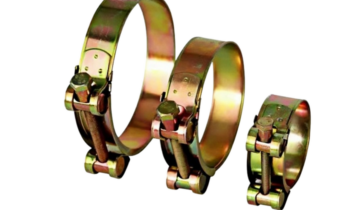
T-Bolt Hose Clamps: Structure, Applications & Materials

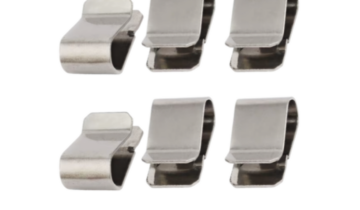
A T‑bolt hose clamp is a heavy‑duty clamping device designed to secure hoses onto fittings or pipes under demanding conditions. It is defined in DIN 3017‑3, which is the part of the DIN 3017 standard family specifically covering bolt clamps (Spannschrauben‑Schellen). Unlike worm‑gear clamps that rely on a perforated band and threaded screw, T‑bolt clamps use a separate bolt and nut mechanism acting on a…
Thread Rolling Screws: Principles, Design & Industrial Applications

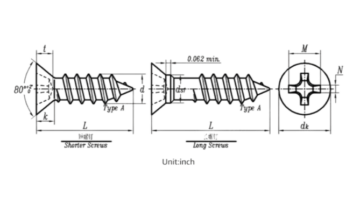
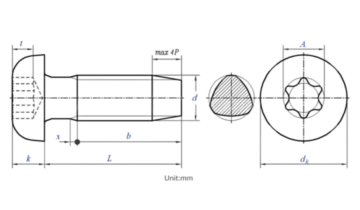
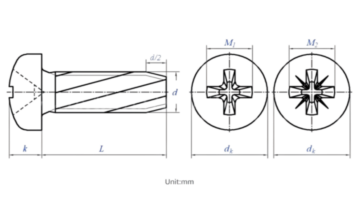
A thread rolling screw is a high‑performance type of self‑tapping fastener that creates its own internal thread by cold‑forming the workpiece material through a precisely engineered, non‑circular cross‑section. Unlike general‑purpose thread forming screws that displace material with standard sheet metal threads, thread rolling screws feature a special lobular (typically trilobular) thread profile that progressively rolls an internal thread into the pilot hole. Most importantly,…

Thread Cutting Screws: Principles, Design & Industrial Applications

A thread cutting screw is a type of self-tapping fastener that creates its own internal thread by removing material from the workpiece. It functions like a combined screw and tap — the cutting action produces chips or swarf as the screw advances, cutting a precise thread path. Thread cutting screws are specified when materials are too brittle for thread forming, when precise…

Thread Forming Screws: Principles, Design & Industrial Applications

A thread forming screw is a type of self-tapping fastener that creates its own internal thread by displacing material rather than removing it. Unlike thread cutting screws, which produce chips, thread forming screws work through plastic deformation — they push the base material aside and allow it to flow around the screw thread profile. This chipless forming process offers significant mechanical advantages that have made…

Carriage Bolt: Applications & Advantages

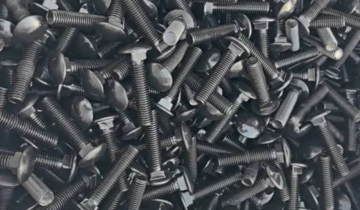
Carriage bolts (also known as round head square neck bolts) are one of the most recognizable fasteners in construction and woodworking. Their distinctive design — a smooth, dome‑shaped head combined with a square neck directly beneath it — sets them apart from standard hex bolts or lag screws. This seemingly simple geometry delivers a powerful functional advantage: the square neck embeds into…

Lead Screw vs. Ball Screw: A Technical Comparison

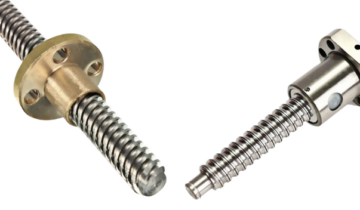
Lead screws and ball screws are both mechanical devices that convert rotary motion into linear motion. They are found in everything from 3D printers and medical devices to CNC machines and aircraft actuators. While they serve the same basic function, their internal working principles are fundamentally different — leading to major differences in efficiency, precision, cost, and application suitability. What…

Close
Close
Sign in
Close
Cart (0)

No products in the cart. No products in the cart.