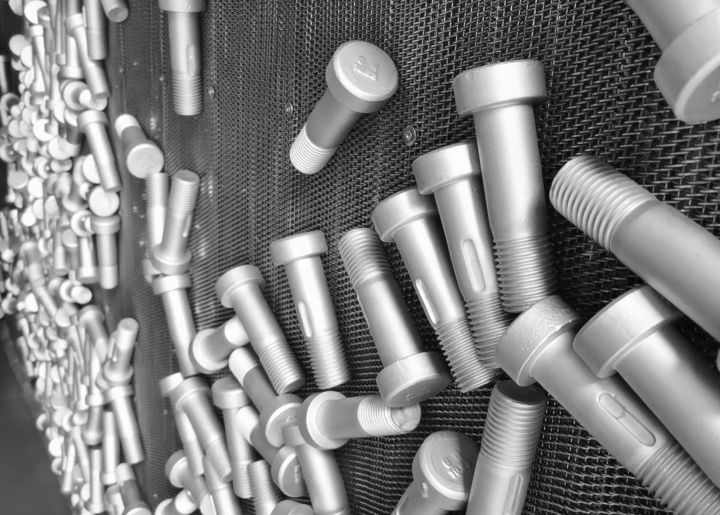
When 240 hours of salt spray resistance is demanded for a bolt, ordinary zinc plating won’t suffice. This level of corrosion protection requires specialized surface finishes engineered for severe environments—marine, automotive underbody, industrial, or coastal applications.
Here are the four most reliable surface treatments that consistently achieve 240+ hours of salt spray resistance, with detailed performance data and application guidance.
Understanding the 240-Hour Requirement
Before diving into specific finishes, it’s important to understand what “240-hour salt spray” means. This refers to testing per ASTM B117 or ISO 9227, where specimens are exposed to a continuous salt fog (5% NaCl) at 35°C . Achieving 240 hours to red rust (base metal corrosion) or white rust (zinc corrosion) depends on both the coating type and thickness.
The finishes below have been validated through laboratory testing and real-world applications to meet or exceed this threshold.
1. Zinc-Nickel Alloy Plating (Zn-Ni)
Zinc-nickel is widely regarded as the premier electroplated finish for high corrosion resistance, particularly in automotive applications.
How It Works
-
Nickel content is precisely controlled between 12-15% for optimal corrosion performance
-
Applied via alkaline or acid electroplating processes
-
Usually combined with trivalent passivation (clear, yellow, or black) and optional topcoat/sealer
Salt Spray Performance
| Condition | Hours to White Rust | Hours to Red Rust |
|---|---|---|
| Zinc-nickel + passivation | 120+ hours | 1,000+ hours |
| With premium sealers | 720+ hours | >1,000 hours |
Best Applications
-
Automotive chassis and engine fasteners
-
High-strength bolts (10.9/12.9 grade) requiring hydrogen embrittlement safety
-
Applications with temperature requirements >120°C
 No products in the cart.