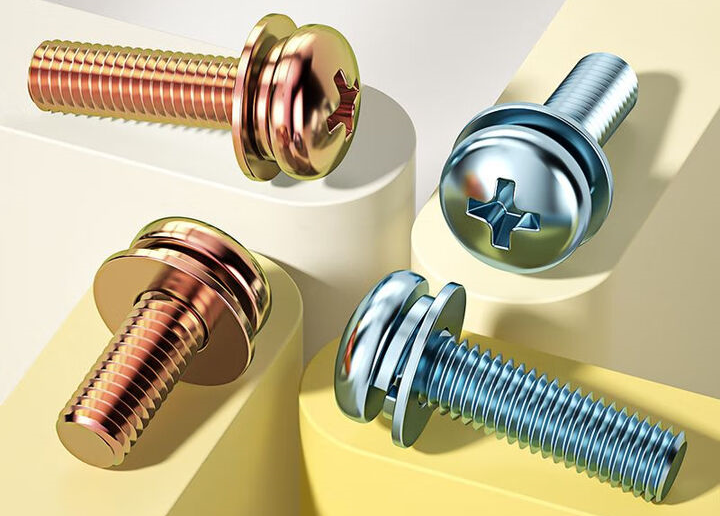
Zinc plating is everywhere. Walk into any hardware store, and you’ll see bins of silver-colored bolts, nuts, and washers—most of them zinc-plated. It’s the default finish for countless fasteners, and for good reason: it’s cost-effective, provides decent corrosion protection, and looks clean.
But what exactly is zinc plating? How does it work? And why can some zinc-plated fasteners last for years outdoors while others rust in months?
What Is Zinc Plating?
Zinc plating, also called electrogalvanizing or electroplating, is a process that deposits a thin layer of zinc onto the surface of steel or iron parts. The purpose is simple: zinc corrodes preferentially to steel, sacrificing itself to protect the underlying metal. This is called galvanic protection or sacrificial protection.
Unlike paint, which merely forms a barrier, zinc continues protecting even if the coating is scratched — the exposed steel stays rust-free because the surrounding zinc corrodes instead.
How It Works: The Electroplating Process
The electroplating process involves several steps:
-
Cleaning and surface preparation – Parts are chemically cleaned to remove oils, dirt, and oxides
-
Acid pickling – Removes any remaining rust or scale
-
Electroplating – Parts are immersed in a zinc salt solution with an electric current applied, causing zinc ions to deposit onto the steel surface
-
Rinsing – Removes residual chemicals
-
Passivation – A post-treatment (often chromate-based) is applied to enhance corrosion resistance and provide color
-
Drying – Final step before packaging
The result is a thin, uniform, and bright metallic coating.
Common Types of Zinc Plating for Fasteners
| Type | Color | Relative Corrosion Resistance |
|---|---|---|
| Clear/Blue | Bright, silvery | Lowest |
| Yellow/Iridescent | Gold/yellow | Medium |
| Black | Dark black | Medium-high |
| Olive drab | Greenish-brown | Highest |
Thickness Classes: What the Numbers Mean
Zinc plating thickness is specified in micrometers (μm) or by ASTM class designations. ASTM B633 defines four standard thickness classes:
| ASTM Class | Thickness (μm) | Typical Service Condition |
|---|---|---|
| Fe/Zn 5 | 5 | Mild indoor |
| Fe/Zn 8 | 8 | Indoor with occasional condensation |
| Fe/Zn 12 | 12 | Moderate outdoor |
| Fe/Zn 25 | 25 | Severe outdoor |
For fasteners, Fe/Zn 5 and Fe/Zn 8 are most common for general use. Thicker coatings provide longer protection but may affect thread fit.
Corrosion Resistance Expectations
Salt spray test results (per ASTM B117) provide a rough guide to expected performance:
| Zinc Type | Thickness | Hours to White Rust | Hours to Red Rust |
|---|---|---|---|
| Clear zinc | 5-8μm | 24-72h | 72-96h |
| Yellow zinc | 8-12μm | 72-96h | 120-200h |
| Olive drab | 12-20μm | 96h+ | Up to 240h |
Key Advantages of Zinc Plating
-
Cost-effective – One of the most economical corrosion-resistant finishes
-
Sacrificial protection – Continues protecting even when scratched
-
Uniform appearance – Bright, attractive finish
-
Good thread tolerance – Thin coating doesn’t affect fit significantly
-
Widely available – Most platers offer it
 No products in the cart.