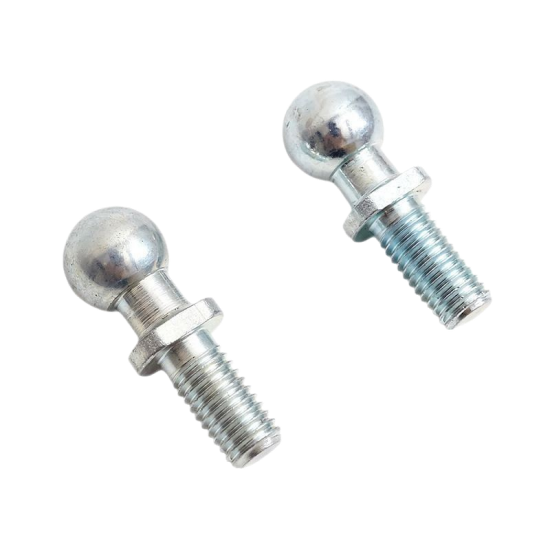
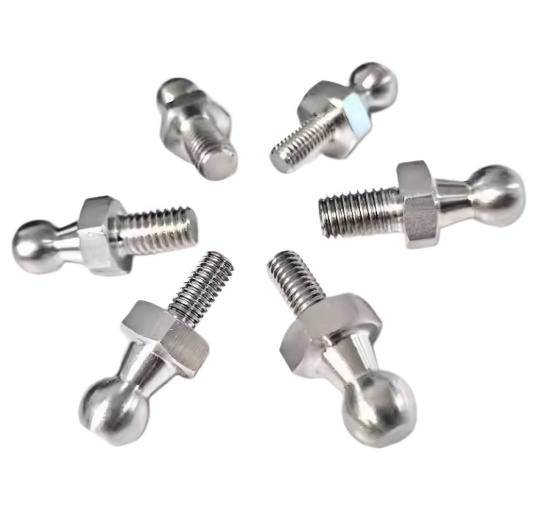
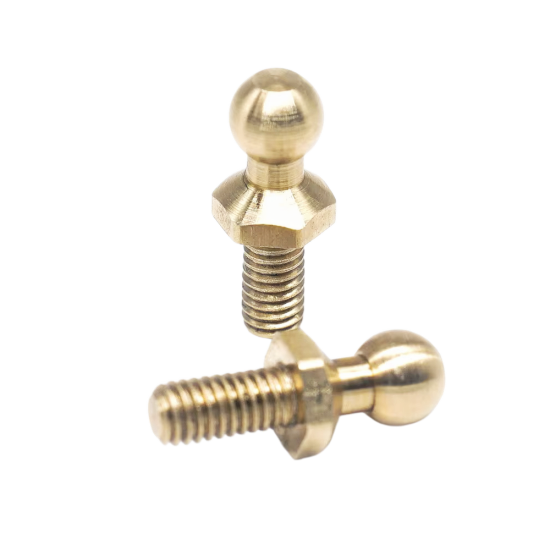
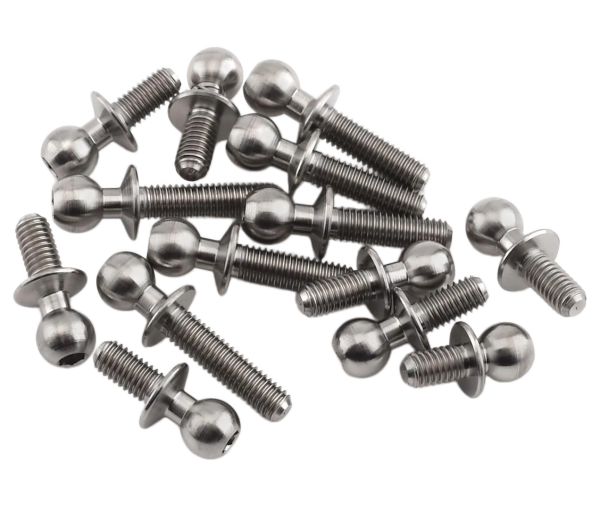
Ball studs are mechanical connecting elements designed to facilitate flexible, low‑friction movement in ball socket assemblies. When combined with a ball socket (e.g. DIN 71805), they form an angle joint (DIN 71802) that allows multi‑axial rotation and pivoting while reliably transmitting tensile and compressive loads. These components are essential in applications requiring high mobility, precise positioning, and long service life under dynamic loads.
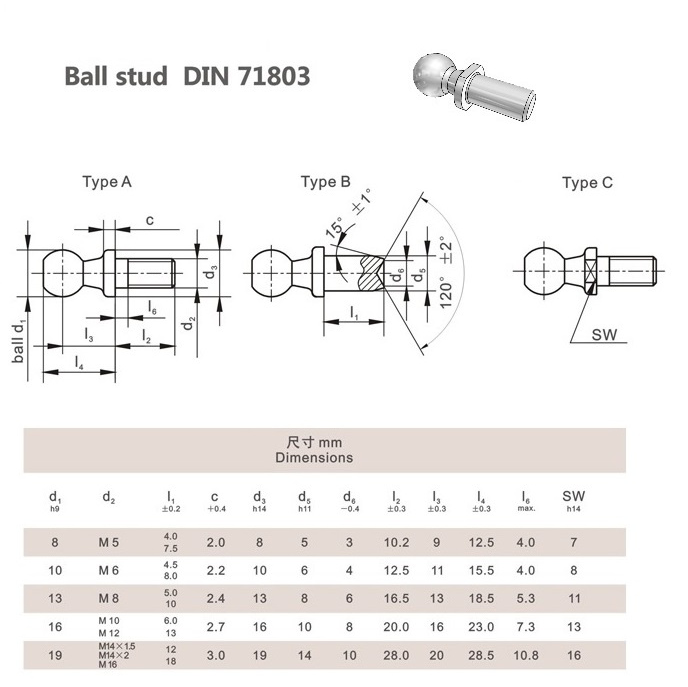
Available Types – DIN 71803
| Form | Mounting Method | Key Feature | Typical Application |
|---|---|---|---|
| Form A | Nut fastening | No spanner surface; smooth shaft | Space‑limited installations where wrench access is restricted |
| Form B (Rivet Stud) | Riveting / Clinching | Shaft designed for permanent press‑fit or riveting; no threads on mounting end | High‑volume series production requiring a permanent, maintenance‑free connection |
| Form C (Threaded Stud) | Threaded bolt | Threaded stud with spanner surface for controlled tightening | Applications requiring precise length adjustment, disassembly, or serviceability |
Form C is the most widely used type for steering linkages, suspension systems, and adjustable mechanisms.
Materials & Surface Finishes
| Material | Properties | Typical Applications |
|---|---|---|
| Steel | High strength, cost‑effective; available with zinc plating | General industrial, automotive chassis |
| Stainless Steel (A2 / A4) | Corrosion resistant, non‑magnetic | Marine, medical, food processing, outdoor applications |
| Alloy Steel | High impact resistance, hardened ball for durability | Heavy‑duty vehicle construction, BEV suspension components |
| Brass | Good corrosion resistance, non‑magnetic, excellent machinability, decorative appearance | Marine hardware, electronic equipment, pneumatic fittings, applications requiring low friction or non‑sparking properties |
| Titanium | Ultra‑lightweight, high strength, precision ground | Racing, aerospace, high‑performance applications |
Surface Finishes
-
Bright / Plain (with light oil)
-
Electro‑galvanized white
-
Zinc with clear chromate
-
Passivated (stainless steel)
-
Nickel or chrome plating (for brass)
Applicable Standards
| Standard | Description |
|---|---|
| DIN 71803 | Ball studs – dimensions and technical specifications (Forms A, B, C) |
| DIN 71805 | Ball sockets – matching components for angle joints |
| DIN 71802 | Angle joints – assembly of ball stud and ball socket |
| SAE J193 | Ball stud and socket assembly test procedures – automotive industry reference |
Common Applications
| Industry | Applications |
|---|---|
| Automotive & Commercial Vehicles | Steering linkages, tie‑rod ends, stabilizer links, suspension control arms, ball joints, hood supports, gas struts |
| Industrial Machinery | Machine tools, conveyor systems, packaging machines, linkage systems, automation equipment |
| Medical & Rehabilitation | Patient positioning systems, orthopedic devices, adjustable mechanisms |
| Construction & Agricultural Machinery | Steering systems, suspension components, heavy‑duty linkages exposed to harsh environments |
| Furniture & Appliance Industry | Adjustable mechanisms, flap connections, gas spring mounts |
| Racing / High‑Performance | Titanium ball studs for lightweight, precision suspension tuning |


 No products in the cart.