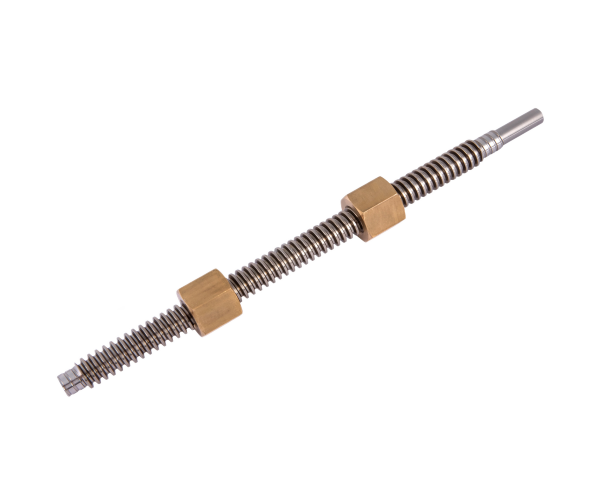
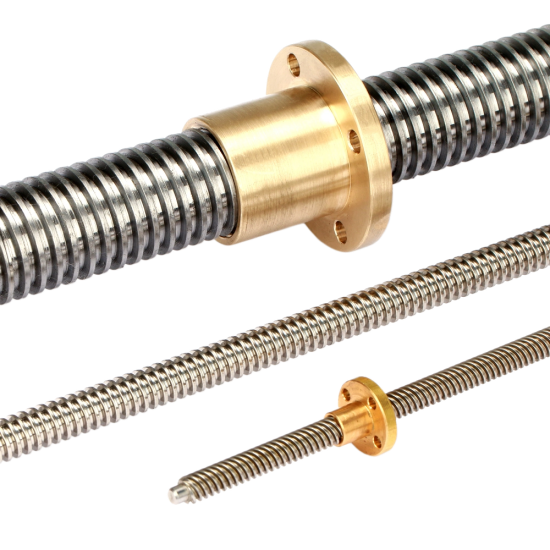
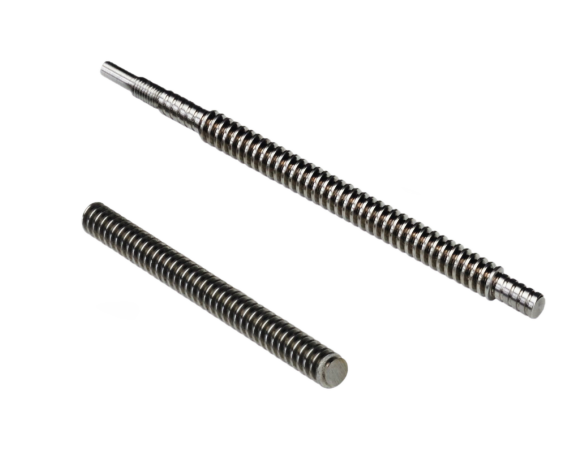
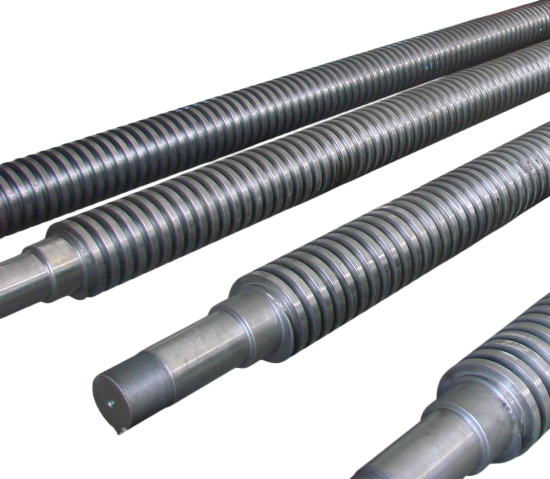
Lead screws are mechanical components designed to convert rotational motion into precise linear motion. A lead screw assembly consists of a threaded shaft and a matching nut; when the screw rotates, the nut travels along the threads, creating smooth, controlled linear movement. Unlike ball screws which use recirculating bearings, lead screws operate on a sliding contact principle, offering a cost-effective solution for a wide range of linear actuation applications.
How They Work
The lead screw’s helix angle transforms torque into linear thrust. As the screw turns, the nut slides along the threads, generating linear displacement proportional to the lead distance per revolution. This simple yet effective mechanism eliminates the need for complex hydraulic or pneumatic systems in many applications. Performance is highly dependent on the coefficient of friction between the nut and screw, which is influenced by material selection and lubrication.
Key Features & Benefits
-
Cost-effective linear actuation: Lower cost than ball screws, ideal for budget-conscious applications
-
Quiet operation: Sliding contact produces minimal noise compared to rolling element systems
-
Self-locking capability: Can hold position without a brake when the helix angle is sufficiently small (typically < 4°–5° for Acme/trapezoidal threads), ideal for vertical applications
-
Design flexibility: Available in multiple thread forms, materials, and precision grades
-
Maintenance-free options: Plastic nuts can operate without external lubrication
-
Wide operating temperature range: Functional from -40°F to 550°F (-40°C to 288°C) depending on materials
Thread Forms Available
| Thread Type | Thread Angle | Key Characteristics | Typical Applications |
|---|---|---|---|
| Acme (29°) | 29° included angle | Original trapezoidal thread; flat apex and valley; general-purpose, centralizing, and Stub Acme classes available | General linear actuation, machine tools, presses |
| Trapezoidal (30°) | 30° included angle | Metric version of Acme; greater strength for high loads; multiple-start and left-hand options available | Heavy-load positioning, industrial machinery |
| Stub Acme | 29° included angle | Reduced thread depth (< half the pitch); for limited space applications | Thin-wall nuts, space-constrained assemblies |
| Buttress | Custom | Modified thread form with superior axial load capacity in one direction | Heavy-duty presses, jacks, high-thrust applications |
| Specialty | Custom | Custom-engineered threads for unique applications | Non-standard motion requirements |
Reference standards: ASME B1.5 (Acme screw threads, inch), DIN 103 (ISO metric trapezoidal screw threads).
Materials & Nut Compatibility
| Screw Material | Properties | Compatible Nut Materials | Typical Applications |
|---|---|---|---|
| Alloy Steel (4140, 4340, 1045) | High strength, heat treatable, wear-resistant | Bearing bronze (e.g., C93200), engineered plastic | Heavy-duty industrial, high-load applications |
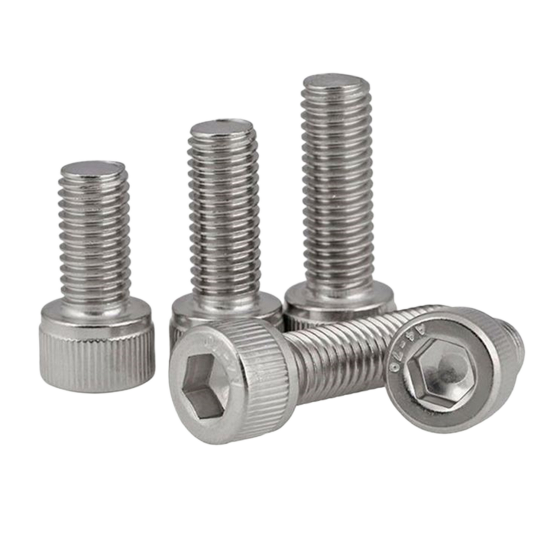
| Stainless Steel (303, 304, 316) | Excellent corrosion resistance, good strength | Bronze, plastic (acetal, nylon, PTFE) | Medical, food processing, marine, cleanroom |
| Carbon Steel (1018, 1020, C45) | Cost-effective, good machinability | Bronze, plastic | General industrial, low to medium load |
| Aluminum | Lightweight, corrosion-resistant | Plastic, bronze | Light-load, aerospace, portable equipment |
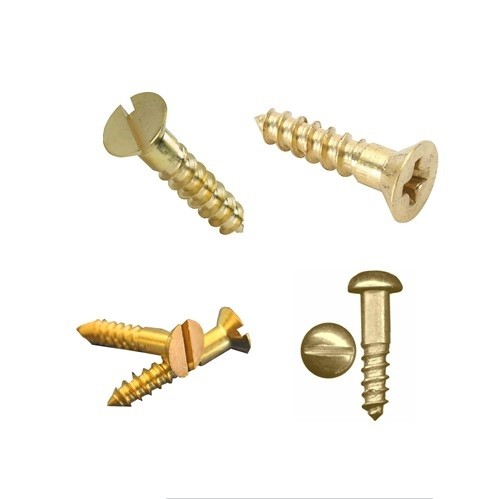
| Brass / Bronze | Corrosion-resistant, self-lubricating | Bronze, plastic | Low-load, decorative, electrical applications |
Surface Finishes & Coatings
| Finish / Coating | Benefits | Recommended Applications |
|---|---|---|
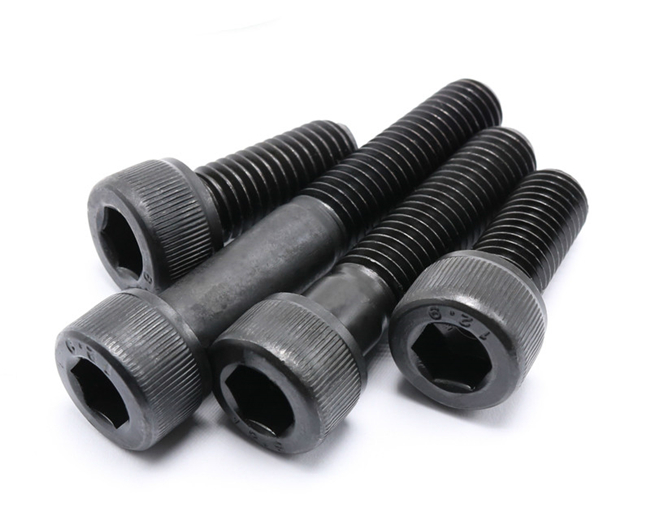
| Black Oxide | Mild corrosion resistance, matte appearance, cost-effective | General industrial, low corrosion environment |
| Zinc Plating | Moderate corrosion resistance, bright finish | Indoor machinery, general industrial |
| Nickel / Chrome Plating | Hard, wear-resistant, decorative | High-wear applications, exposed assemblies |
| PTFE / TFE Coating | Low friction, dry lubrication, reduces nut wear, chemical resistant | Maintenance-free systems, cleanroom, medical devices |
| Armoloy® / Hard Chrome | Very hard (78 HRC), thin, dense, wear-resistant | High-cycle, abrasive environments |
| Phosphate / Passivation | Corrosion protection, improved lubricant adhesion | Stainless steel applications, military specs |
Applicable Standards
| Standard | Scope |
|---|---|
| ASME B1.5 | Acme screw threads (inch series) – dimensions, tolerances, and design data |
| DIN 103 | ISO metric trapezoidal screw threads – basic profile, dimensions, tolerances |
| ASME B1.8 | Stub Acme screw threads |
| ASME B1.9 | Buttress inch screw threads |
| DIN 513 | Metric buttress threads |
| ISO 2901 / 2902 / 2903 | ISO metric trapezoidal screw threads – basic profile, general plan, tolerances |
Common Applications
| Industry | Specific Applications |
|---|---|
| Industrial Machinery | CNC routers, milling machine accessories, presses, jacks, vises |
| Automation & Robotics | Linear actuators, pick-and-place systems, conveyor positioning |
| Medical Equipment | Patient positioning systems, diagnostic devices, surgical tables |
| 3D Printing | Z-axis motion, print bed positioning |
| Automotive | Power seat adjusters, steering systems, test equipment |
| Aerospace | Flight control actuators, cargo door mechanisms |
| Semiconductor | Wafer handling, precision positioning stages |
| Packaging | Filling machines, labeling equipment, carton sealers |
| Renewable Energy | Solar tracking systems, wind turbine pitch control |
For custom lead screw requirements including special materials, end machining, or precision tolerances, please contact us for a tailored solution.







 No products in the cart.