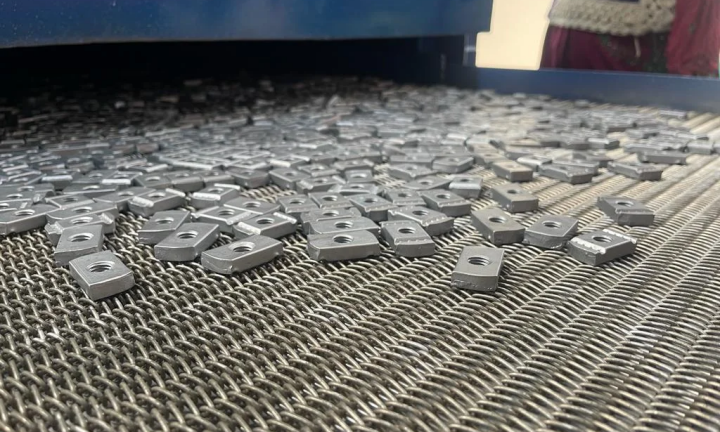
For high-strength fasteners (10.9, 12.9 grades and above), the choice of surface finish isn’t just about corrosion resistance — it’s a safety decision. Traditional electroplating introduces hydrogen, which can cause delayed brittle fracture in high-tensile steel. Zinc flake coatings solve this problem entirely. They are applied non-electrolytically, eliminating hydrogen embrittlement risk while delivering exceptional corrosion protection — often exceeding 1,000 hours in salt spray testing.
What Are Zinc Flake Coatings?
Zinc flake coatings are non-electrolytically applied, water-based coatings consisting of overlapping micro-flakes of zinc and aluminum in an inorganic binder. The coating is applied via dip‑spin, dip‑drain, or spray, then cured at elevated temperature to form a thin, dense barrier layer.
Unlike electroplating, which deposits metal via an electric current, zinc flake coatings are mechanically applied. Surface preparation uses shot blasting only — acid pickling is strictly avoided — so no hydrogen is generated during the process. This is the critical difference that makes them safe for high-strength steel.
The protective mechanism works on three levels:
-
Barrier protection: Overlapping zinc and aluminum flakes create a physical barrier, dramatically lengthening the path for corrosive agents (moisture, salt) to reach the steel surface — the so-called “labyrinth effect”.
-
Cathodic protection: Zinc acts as a sacrificial anode, corroding preferentially to protect the underlying steel.
-
Passivation: Metal oxides formed during curing delay corrosion reactions, providing additional protection.
This multi-layer defence is what gives zinc flake coatings their exceptional durability.
Dacromet®: The Original Zinc Flake Coating
Dacromet (also known as zinc-chromium coating) was developed in the 1960s as a high-performance alternative to electroplating and hot-dip galvanizing. It consists of zinc and aluminum flakes in a chromate binder.
Key Specifications
| Parameter | Value |
|---|---|
| Typical thickness | 5–8 μm (Grade A) to 8–12 μm (Grade B for higher corrosion requirements) |
| Salt spray resistance | 1,200+ hours to red rust (per ISO 9227) |
| Corrosion protection | 7–10× better than electrogalvanizing (100–300 hours) |
| Maximum operating temperature | 250°C continuous (short-term 300°C with reduced corrosion protection) |
| Hydrogen embrittlement risk | None — non-electrolytic process |
| Friction coefficient | 0.10–0.15 (adjustable) |
| Appearance | Silver-grey |
The original Dacromet formulation contains hexavalent chromium (Cr⁶⁺), a toxic substance regulated under RoHS, REACH, and ELV directives. While Dacromet remains in use for legacy specifications and applications where Cr⁶⁺ is still permitted, the industry has largely shifted to chrome‑free alternatives.
Application Process
Dacromet is applied via dip‑spin (for small parts) or dip‑drain (for larger components). Surface preparation uses shot blasting — no acid pickling — which eliminates hydrogen introduction at the source. Parts are then cured at 300–350°C for 20–40 minutes, creating a hard, durable, and corrosion‑resistant film.
Typical Applications
-
Automotive chassis and engine fasteners
-
Marine components (high salt-spray environments)
-
Bridge structures and outdoor infrastructure
-
Wind turbine tower bolts
Geomet®: Chrome-Free Zinc Flake Coating
Geomet is a chrome‑free, water‑based zinc flake coating developed by NOF Metal Coatings Europe (France). It was designed as a direct replacement for Dacromet, meeting the strict environmental requirements of major automotive manufacturers while maintaining — and in some cases exceeding — performance.
Geomet coatings are available in three main variants:
| Variant | Salt Spray Resistance | Key Feature |
|---|---|---|
| Geomet 500 | 600–800 hours | Self‑lubricating; friction coefficient 0.12–0.18; designed for threaded fasteners |
| Geomet 321 | 720+ hours | Can be combined with sealant topcoat; friction adjustable with lubricant |
| Geomet 720 | Up to 1,500 hours | Ultra‑high corrosion protection at 8–10 μm thickness |
Key Advantages
-
Chrome‑free and PFAS‑free: Compliant with RoHS, REACH, ELV; some formulations are also PFAS‑free for wind energy applications.
-
No hydrogen embrittlement: Non‑electrolytic application eliminates risk entirely.
-
Controlled friction: Geomet 500 offers self‑lubricating properties with friction coefficient 0.12–0.18, simplifying assembly torque control.
-
Excellent adhesion: Strong bonding to steel, stainless steel, and aluminium substrates.
-
Self‑healing: Mechanically damaged areas can self‑repair via zinc carbonate formation.
Geomet is approved by major automotive OEMs including BMW (GS 90010 ZnS3), Ford (S438), GM (3359), and VW (TL245).
Delta®: Multi-Layer Zinc Flake System
Delta (Delta Protekt® / Delta-MKS®) is a premium chrome‑free zinc flake coating system developed by Dörken (Germany). Unlike single‑layer coatings, Delta uses a basecoat + topcoat architecture, allowing independent optimization of corrosion protection, friction control, and appearance.
Basecoat: Delta Protekt KL100
The zinc flake basecoat provides primary corrosion protection. It is applied at approximately 8–12 μm thickness and cured at around 200°C. The coating is silver-grey and electrically conductive — a key feature that allows its use in grounding applications.
Topcoat Options
| Topcoat | Function |
|---|---|
| Delta Seal GZ | Organic sealing layer; adjusts friction coefficient to 0.09–0.14; improves chemical and abrasion resistance |
| Delta Protekt VH series | Transparent topcoat that enhances corrosion resistance while controlling torque range |
| Delta Lube | Integrated lubricant for friction control |
Performance Specifications
| Parameter | Value |
|---|---|
| Salt spray resistance | 720–1,200+ hours (basecoat + topcoat) |
| Typical thickness | 8–12 μm (total system) |
| Maximum operating temperature | 230°C (continuous) |
| Hydrogen embrittlement risk | None — non‑electrolytic process |
| Friction coefficient | Adjustable from 0.09–0.14 (with topcoat) |
| Environmental compliance | RoHS, REACH, ELV — completely chrome‑free |
Delta systems are approved by major automotive and industrial OEMs including VW (TL245), GM (GMW3359), Ford (S442), BMW (GS90010 ZNS2/ZNS3), and Rover.
Why Zinc Flake Coatings for High-Strength Fasteners?
High-strength fasteners (property classes 10.9 and 12.9) are extremely susceptible to hydrogen embrittlement. According to ISO 4042, fasteners with hardness above 320 HV are considered susceptible and require risk assessment — and 10.9/12.9 bolts have hardness well into this danger zone. Traditional electroplating introduces hydrogen during acid pickling and the electrochemical process, which can lead to delayed brittle fracture under load.
Zinc flake coatings eliminate this risk entirely. ISO 10683:2018 explicitly notes that coatings in accordance with this document are especially used for high-strength fasteners (≥1,000 MPa) to avoid the risk of internal hydrogen embrittlement (IHE).
Additional Advantages
-
Thin coating preserves threads: At 5–15 μm, zinc flake coatings do not require oversized tapping — unlike hot‑dip galvanizing (50–80 μm), which needs thread allowance.
-
Controlled friction for assembly: Friction coefficient can be precisely adjusted (typically 0.09–0.18 depending on product), ensuring consistent torque-tension performance during automated assembly.
-
High temperature resistance: Operating temperatures range from 230°C (Delta) to 250°C (Dacromet, Geomet) continuous.
-
Excellent bimetallic compatibility: Particularly good with aluminium assemblies, preventing galvanic corrosion.
Comparison: Dacromet vs. Geomet vs. Delta
| Aspect | Dacromet® (Legacy) | Geomet® (Chrome‑Free) | Delta® (Chrome‑Free) |
|---|---|---|---|
| Cr⁶⁺ content | Contains hexavalent chromium | Chrome‑free | Chrome‑free |
| Salt spray (hours) | 1,200+ | 600–1,500 (varies by type) | 720–1,200+ (basecoat + topcoat) |
| Typical thickness | 5–12 μm | 5–15 μm | 8–12 μm |
| Friction coefficient | 0.10–0.15 | 0.12–0.18 (Geomet 500) | 0.09–0.14 (with topcoat) |
| Max operating temp. | 250°C | 250°C | 230°C |
| Hydrogen embrittlement | None | None | None |
| Pre‑treatment | Shot blasting (no acid) | Shot blasting (no acid) | Shot blasting (no acid) |
| Environmental compliance | Cr⁶⁺ restricted under RoHS/REACH | Fully compliant | Fully compliant |
| Typical applications | Legacy automotive, marine, infrastructure | General automotive, EU exports, industrial | Premium automotive, aerospace, wind energy |
| Key differentiator | Original technology; very high corrosion resistance | Self‑lubricating option (Geomet 500); water‑based | Multi‑layer system allows independent adjustment of friction and corrosion |
Applications
Automotive
Zinc flake coatings are the standard finish for automotive underbody, chassis, suspension, and engine fasteners. They provide the corrosion resistance needed for road salt exposure (typical 500–1,000+ hours salt spray) without the hydrogen embrittlement risk that would compromise safety-critical joints.
Wind Energy
Wind turbine tower bolts require extremely long service life in outdoor environments with minimal maintenance. Geomet 321 + PLUS VLh 2 Silver is one formulation designed specifically to meet these demanding specifications while supporting industry-wide sustainability objectives.
Construction and Infrastructure
Bridges, transmission towers, and outdoor structures require high corrosion resistance without sacrificing thread fit. Zinc flake coatings are widely specified for structural fasteners.
Aerospace
Delta systems are used for critical components that must survive in air, at sea, or in tough terrain, while meeting strict environmental and performance requirements. Delta Protekt is specified on various aircraft fasteners for corrosion protection without the use of cadmium.
Standards and Specifications
When specifying zinc flake coatings, reference the following standards:
| Standard | Scope |
|---|---|
| ISO 10683:2018 | Fasteners — Non-electrolytically applied chrome-free zinc flake coating systems. Covers basecoat, basecoat + topcoat, with or without integrated lubricant. (Hexavalent chromium coatings are excluded from this edition.) |
| EN 13858 | Corrosion protection of metals — Non-electrolytically applied zinc flake coatings on iron or steel components. |
| ASTM F3019/F3019M | Standard specification for non-electrolytically applied zinc-flake composite corrosion protective coatings for fasteners. |
| DIN 50939 | Zinc flake coatings — Technical delivery conditions. |
| GB/T 5267.2 | Chinese standard for zinc flake coatings on fasteners. |
Summary: Zinc Flake Coatings at a Glance
| Aspect | Summary |
|---|---|
| What they are | Non‑electrolytically applied, water‑based coatings of overlapping zinc and aluminium flakes in an inorganic binder |
| How they work | Barrier protection + cathodic protection + passivation (three mechanisms) |
| Key advantage for high‑strength bolts | No hydrogen embrittlement — process uses shot blasting only, no acid pickling or electrolysis |
| Corrosion resistance | 600–1,500+ hours salt spray (5–10× better than electrogalvanizing) |
| Coating thickness | 5–15 μm — preserves thread fit (no oversize tapping required) |
| Temperature range | 230°C to 250°C continuous (depending on specific product) |
| Friction control | Adjustable from 0.09–0.18 (critical for torque‑controlled assembly) |
| Primary brands | Dacromet® (legacy, Cr⁶⁺), Geomet® (chrome‑free, NOF), Delta® (chrome‑free, Dörken) |
| Key standards | ISO 10683:2018 (chrome‑free only), EN 13858, ASTM F3019, DIN 50939 |
| Typical applications | Automotive chassis & engine, wind turbines, construction, aerospace, marine |
 No products in the cart.