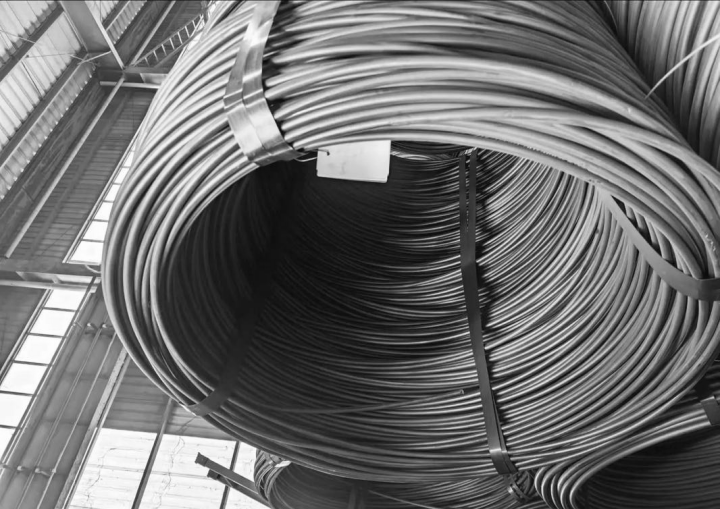
“I see ’10#’ on some quotes and ‘ML10’ on others. They both have 0.10% carbon. Can I use either one?”
This is one of the most common questions we hear from buyers reviewing Chinese steel specifications. And the answer matters—because choosing the wrong one can mean cracked heads, rejected parts, and delayed shipments.
Short answer: No, they are not the same. While they share similar carbon content, they are governed by different standards, have different quality requirements, and are intended for completely different applications.
Quick Comparison: 10# vs. ML10
| Aspect | 10# (10号钢) | ML10 | What This Means for You |
|---|---|---|---|
| Full Name | 10号优质碳素结构钢 | ML10冷镦钢 | — |
| Governing Standard | GB/T 699 (Quality carbon structural steels) | GB/T 6478 (Steels for cold heading and cold extruding) | ML10 follows a stricter standard specifically for fasteners |
| Primary Intended Use | General purpose structural applications | Specifically designed for cold heading of fasteners | 10# is for machining; ML10 is for forming |
| Carbon Content | 0.07-0.13% | 0.07-0.14% | Similar—not the deciding factor |
| Manganese (Mn) | 0.35-0.65% | 0.20-0.50% | Both acceptable |
| Silicon (Si) | 0.17-0.37% | ≤0.03% (≤0.17% for electric furnace) | Critical difference—see below |
| Residual Elements (Cr, Ni, Cu) | Less strict (Cr ≤0.15, Ni ≤0.25, Cu ≤0.25) | Strictly controlled (each ≤0.02%) | ML10 ensures consistent forming; 10# may have impurities that cause problems |
| Surface Quality | Standard | Superior—controlled to prevent cracking during heading | 10# may have surface defects that open up during forming |
| Key Feature | Good plasticity and weldability | Optimized for cold deformation without cracking | 10# is fine for machining; ML10 is designed for cold he |
Why Silicon Is the Critical Difference
The most important difference between 10# and ML10 is silicon content:
-
10# : 0.17-0.37% silicon
-
ML10 : ≤0.03% silicon
Why this matters: Silicon strengthens steel—which is good for structural applications, but bad for cold heading. Higher silicon makes the steel harder and less ductile, increasing the risk of cracking when the material is squeezed into a bolt head.
ML10 keeps silicon exceptionally low specifically to maintain softness and formability. This single difference makes ML10 safe for cold heading and 10# risky.
Other Hidden Differences
Residual Elements (Cr, Ni, Cu)
10# allows up to 0.25% of these “tramp elements.” ML10 limits each to 0.02%. Why? Even small amounts of these elements can cause:
-
Inconsistent deformation during heading
-
Variable response to heat treatment
-
Surface irregularities
 No products in the cart.