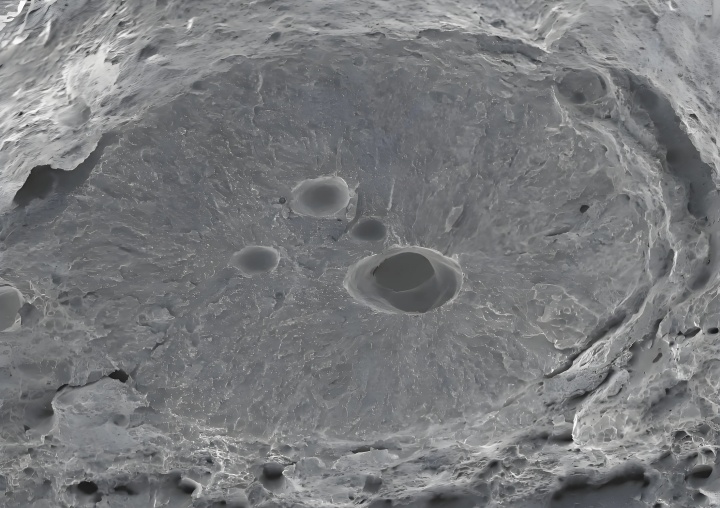
Hydrogen embrittlement (HE) is one of the most insidious failure modes for high-strength bolts. It doesn’t announce itself with visible warning signs. It doesn’t cause bolts to stretch or deform before breaking. Instead, a bolt can be perfectly tightened, pass all quality checks, and then — hours, days, or even weeks later — snap without warning under a load well below its rated strength.
For engineers, procurement professionals, and quality managers working with high-strength fasteners, understanding hydrogen embrittlement isn’t optional. It’s a critical safety and reliability concern that affects everything from automotive suspensions to structural steel connections.
What Is Hydrogen Embrittlement?
Hydrogen embrittlement is a phenomenon where atomic hydrogen enters the steel lattice, diffuses to areas of high triaxial stress (such as grain boundaries or inclusions), and causes the material to lose its ductility. The result is a brittle, catastrophic fracture at stress levels well below the bolt’s normal yield strength — often with no prior plastic deformation.
The process requires three factors to be present simultaneously:
-
A susceptible material (high-strength steel, typically ≥ 1000 MPa tensile strength)
-
Tensile stress (from preload during tightening or external service loads)
-
Absorbed hydrogen (introduced during manufacturing or from the service environment)
When all three are present, the risk of delayed failure is real — and unpredictable.
Key characteristic: Hydrogen embrittlement is a delayed failure mechanism. A bolt may be tightened correctly, pass inspection, and then fail hours, days, or even weeks later without any warning.
Which Bolts Are at Risk?
Not all bolts are equally susceptible. The primary driver of hydrogen embrittlement susceptibility is hardness (or tensile strength).
According to ISO 4042 (Fasteners — Electroplated coating systems), fasteners with a hardness above 320 HV are considered susceptible to hydrogen embrittlement and require a risk assessment or specific mitigation measures. This threshold corresponds to property classes 10.9 and above.
Property Class Risk Summary
| Property Class | Hardness Range (HRC) | Tensile Strength | Hydrogen Embrittlement Risk |
|---|---|---|---|
| 8.8 | 22–32 HRC (Core) | 800 MPa | Low (Typically below 320 HV threshold) |
| 10.9 | 32–39 HRC | 1,000 MPa | High (Exceeds threshold) |
| 12.9 | 39–44 HRC | 1,200 MPa | Very high (Well above threshold) |
Note: While 8.8 bolts generally exhibit core hardness below the 320 HV risk threshold, variations in surface hardness due to heat treatment or cold working can occasionally approach the limit. However, 10.9 and 12.9 grades are definitively high-risk categories.
Research has confirmed that 12.9-grade bolts have very high hydrogen embrittlement sensitivity after zinc plating, while 10.9-grade bolts under the same conditions may not experience hydrogen embrittlement at all — underscoring how rapidly risk escalates with strength.
Where Does Hydrogen Come From?
Hydrogen can enter high-strength bolts from several sources — some during manufacturing, others during service life.
Manufacturing Sources
The most common source is surface finishing processes, particularly those involving acid pickling or electroplating. During acid pickling (used to remove rust and scale), hydrogen is generated and can diffuse into the steel. Similarly, electroplating processes (zinc, cadmium, etc.) produce hydrogen as a byproduct of the electrochemical reaction.
Other manufacturing sources include welding and improper heat treatment atmospheres.
Service Environment Sources
Hydrogen can also enter bolts during service — often overlooked by procurement specifications. Atmospheric corrosion, particularly in marine or industrial environments, can generate hydrogen that diffuses into the steel. Exposure to H₂S (sour service) in oil and gas applications is another well-known source. Cathodic protection systems (used on pipelines and offshore structures) can also over-protect and generate hydrogen.
How Hydrogen Enters During Surface Finishing
Different surface finishing processes present different levels of hydrogen embrittlement risk. Understanding this hierarchy helps buyers specify the right finish for their application.
| Process | Hydrogen Risk | Why | Best for |
|---|---|---|---|
| Zinc flake coatings (Dacromet, Geomet, Delta) | None | Mechanical application; no acid pickling or electrolysis | 10.9 and 12.9 bolts, safety-critical applications |
| Mechanical zinc plating | None | Zinc particles cold-welded mechanically | High-strength bolts where electroplating is risky |
| Alkaline zinc plating | Lower | Generates less hydrogen than acid zinc | 8.8 bolts; 10.9 with baking |
| Acid zinc plating | Higher | Generates more hydrogen during deposition | 8.8 bolts only; not recommended for ≥10.9 |
| Hot-dip galvanizing | Low-moderate | Hydrogen from acid pickling step; requires baking | Structural bolts; careful control required |
The key takeaway: For 10.9 and especially 12.9 grade bolts, zinc flake coatings are the safest choice because they completely eliminate the hydrogen introduction step.
Prevention: Baking (Hydrogen Embrittlement Relief)
When electroplating cannot be avoided, baking (also called thermal hydrogen embrittlement relief) is the most common and effective mitigation method.
Baking Parameters
| Parameter | Recommendation |
|---|---|
| Temperature | 190–230°C (375–450°F) |
| Duration | 4–24 hours (depends on material strength, coating type, and thickness) |
| Timing | Within 1–4 hours of plating — before hydrogen diffuses deeper into the steel |
| Standards | ASTM B850, ISO 9587, ISO 4042 Annex A |
Baking works by heating the plated fasteners to drive off absorbed hydrogen before it can cause damage. However, it is not a guarantee. Even after baking, a small residual risk may remain — especially for the highest strength grades.
Common Mistakes
| Mistake | Consequence |
|---|---|
| Delaying baking >4 hours | Hydrogen penetrates deeper into the steel, making removal much harder |
| Overheating (>250°C) | Can temper high-strength bolts, reducing hardness and strength |
| Skipping hydrogen testing | Unknown residual risk for critical applications (bridges, aircraft, pressure vessels) |
Prevention: Alternative Finishes (The Safer Path)
The most reliable way to prevent hydrogen embrittlement is to avoid introducing hydrogen in the first place. For high-strength bolts, zinc flake coatings (such as Dacromet, Geomet, and Delta) are the industry’s preferred solution.
These coatings are applied mechanically — not electrochemically — so no hydrogen is generated during application. They also provide exceptional corrosion resistance (typically 600–1,000+ hours salt spray) and are completely free of hydrogen embrittlement risk.
For applications where electroplating is specified for cost reasons, buyers should be aware that the cost savings may come with increased risk — especially for 10.9 and 12.9 grade bolts.
 No products in the cart.