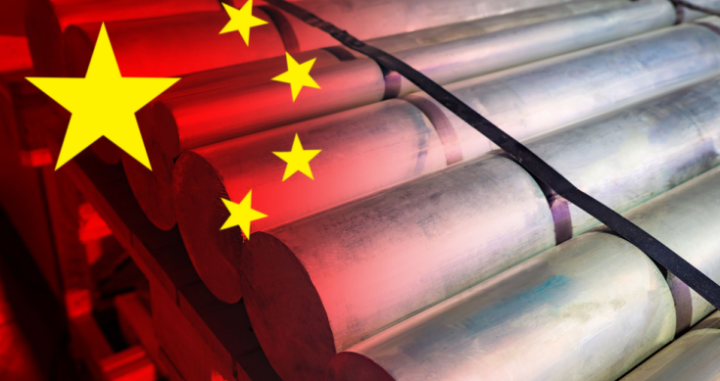
When a fastener needs to achieve property classes 10.9 or 12.9, plain carbon steel often reaches its limit. The required strength, hardenability, and toughness demand alloy steels — materials with carefully controlled additions of chromium, molybdenum, manganese, boron, or titanium.
In the Chinese fastener industry, several alloy steel grades have become the standard choices for high-strength bolts, studs, and screws. This article covers the most common alloy steels used for 10.9 and 12.9-grade fasteners: their chemical composition, mechanical properties, heat treatment, international equivalents, and typical applications.
Why Alloy Steel for High-Strength Fasteners?
As fastener diameter increases, plain carbon steel (like 45#) begins to “淬不透” (fail to fully harden through the core). The center of a large-diameter bolt may not transform to martensite during quenching, resulting in lower strength at the core — a dangerous condition for high-load applications.
Alloy steels solve this problem by adding elements that increase hardenability:
| Alloying Element | Effect |
|---|---|
| Chromium (Cr) | Improves hardenability, wear resistance, and corrosion resistance |
| Molybdenum (Mo) | Refines grain structure; enhances high‑temperature strength; reduces temper brittleness |
| Manganese (Mn) | Increases strength and hardenability |
| Boron (B) | Dramatically improves hardenability with very small additions |
| Titanium (Ti) | Refines grain structure; stabilizes nitrogen |
For large-diameter bolts, alloy steels ensure uniform mechanical properties from surface to core — a critical requirement for safety-critical applications.
Common Chinese Alloy Steel Grades for Fasteners
40Cr
40Cr is a chromium-alloyed structural steel, often considered the entry-level alloy steel for high-strength fasteners. It is widely used for Class 8.8 bolts in larger diameters (M16–M24) and for Class 10.9 in smaller diameters.
The addition of chromium (approximately 0.8–1.1%) significantly improves hardenability compared to plain carbon steel. In practical terms, where 45# steel may struggle to through-harden above M16, 40Cr can be reliably used up to M20–M24 depending on the specific heat treatment process.
| Property | Value |
|---|---|
| Carbon (C) | 0.37–0.44% |
| Chromium (Cr) | 0.80–1.10% |
| Standard | GB/T 3077 |
| Primary fastener use | Class 8.8 (larger diameters), Class 10.9 (small diameters) |
| Heat treatment | Quenched + tempered |
| SAE equivalent | 5140 |
| ISO equivalent | 41Cr4 (ISO 683-2) |
40Cr represents the transition point: above M16, it replaces 45#; below M16, 45# may still be sufficient. This is why many fastener manufacturers keep 40Cr in their portfolio for medium-to-large diameter orders.
35CrMo
35CrMo is a chromium-molybdenum alloy steel offering higher strength and better hardenability than 40Cr. It is widely used for Class 10.9 and 12.9 bolts, particularly in automotive, structural, and heavy machinery applications.
The addition of molybdenum (0.15–0.25%) provides several benefits: improved resistance to temper embrittlement, better high-temperature strength, and more uniform hardenability through larger sections. These characteristics make 35CrMo the material of choice when the application demands both high strength and reliable performance at elevated temperatures.
Note: The mechanical properties listed in GB/T 3077 for 35CrMo (e.g., tensile strength ≥985 MPa) refer to standard test specimens after heat treatment, not the finished fastener properties. For Class 10.9 fasteners, actual tensile strength must meet ≥1,000 MPa; for Class 12.9, ≥1,200 MPa — achieved through controlled quenching and tempering.
| Property | Value |
|---|---|
| Carbon (C) | 0.32–0.40% |
| Chromium (Cr) | 0.80–1.10% |
| Molybdenum (Mo) | 0.15–0.25% |
| Standard | GB/T 3077 |
| Primary fastener use | Class 10.9 and 12.9 bolts, studs, nuts |
| SAE equivalent | 4135/4137 |
| JIS equivalent | SCM435 (similar) |
| DIN equivalent | 34CrMo4 |
| ISO equivalent | 34CrMo4 (ISO 683-2) |
35CrMo is widely specified for high-strength structural bolts, automotive suspension components, and wind turbine tower connections — applications where both strength and reliability are paramount.
20MnTiB
20MnTiB is a Chinese-developed boron steel specifically designed for Class 10.9 high-strength bolts. It is unique to the Chinese market and has proven itself over decades of use in automotive and structural applications.
The combination of manganese (Mn), titanium (Ti), and boron (B) creates a material with excellent hardenability despite its relatively low carbon content (0.17–0.24%). The small addition of boron (as little as 0.0005–0.0035%) dramatically increases the steel’s response to heat treatment — a phenomenon that allows 20MnTiB to achieve the high strength required for Class 10.9 bolts without the need for expensive chromium or molybdenum additions. In terms of performance, it is comparable to international boron grades such as 10B21 or 10B28.
| Property | Value |
|---|---|
| Carbon (C) | 0.17–0.24% |
| Manganese (Mn) | 1.30–1.60% |
| Titanium (Ti) | 0.04–0.10% |
| Boron (B) | 0.0005–0.0035% |
| Typical critical diameter (oil quench) | ~20 mm |
| Recommended heat treatment for 10.9 fasteners | Quench 860°C (oil) → Temper 450–550°C (water/air) |
| Typical tensile strength (after fastener HT) | ≥1,000 MPa |
| Standard | GB/T 3077 |
| Primary fastener use | Class 10.9 high-strength bolts (M12–M24) |
| Cold heading variant | ML20MnTiB (GB/T 6478) for cold-formed fasteners |
⚠️ Important: The tempering temperature for 20MnTiB fasteners must be in the 450–550°C range to achieve the required strength and toughness balance for Class 10.9. The lower tempering temperature (200°C) specified in GB/T 3077 is intended for general machinery parts requiring high hardness, not for fasteners.
SCM435 (Japanese Standard, Widely Produced in China)
Although SCM435 is a Japanese JIS standard (JIS G4105), Chinese steel mills produce it in large quantities, and it is extremely common in Chinese fastener manufacturing. SCM435 is the premium choice for Class 10.9 and 12.9 fasteners, especially in automotive and high-performance applications.
The combination of chromium (0.90–1.20%) and molybdenum (0.15–0.30%) provides excellent hardenability, good resistance to temper embrittlement, and consistent mechanical properties even in larger diameters (up to M20–M24 for 10.9 and M18–M24 for 12.9). Compared to 35CrMo, SCM435 features a tighter carbon range (0.33–0.38%) and stricter impurity limits in the JIS specification, offering better consistency in critical applications.
| Property | Value |
|---|---|
| Carbon (C) | 0.33–0.38% |
| Silicon (Si) | 0.15–0.35% |
| Manganese (Mn) | 0.60–0.85% |
| Chromium (Cr) | 0.90–1.20% |
| Molybdenum (Mo) | 0.15–0.30% |
| Typical tensile (after HT) | 1,000–1,200 MPa |
| Standard | JIS G4105 (JIS G4053) |
| Chinese equivalent | 35CrMo (similar; see note above) |
| Primary fastener use | Class 10.9 and 12.9 bolts, screws, studs |
| Temperature range | -20°C to 480°C |
For critical applications requiring maximum reliability — such as automotive powertrain, suspension components, and high-stress structural connections — SCM435 is often the specified material, even when other grades might be technically sufficient.
ML20MnTiB (Cold-Heading Variant)
ML20MnTiB is the cold-heading variant of 20MnTiB, standardized under GB/T 6478 (Steels for Cold Heading and Cold Extruding). While 20MnTiB (GB/T 3077) is intended for machined parts, ML20MnTiB is specifically designed for cold-formed fasteners — bolts and screws produced by cold heading rather than machining.
The difference matters in practice: using standard 20MnTiB for cold heading can lead to cracking during forming, because the surface quality and ductility requirements for cold heading are more stringent. ML20MnTiB is produced with tighter controls on surface defects, residual elements, and deoxidation — all optimized for the cold heading process.
| Property | Value |
|---|---|
| Carbon (C) | Slightly lower than 20MnTiB to improve cold formability |
| Boron (B) | Controlled addition to ensure hardenability |
| Surface quality | Strictly controlled for cold heading |
| Standard | GB/T 6478 |
| Primary fastener use | Cold-headed Class 10.9 bolts and screws |
| Parent grade | 20MnTiB (GB/T 3077) |
When sourcing cold-headed Class 10.9 bolts from Chinese suppliers, ML20MnTiB is often the material on the certificate — even if the engineering drawing specifies “20MnTiB”. This is because ML20MnTiB is the version optimized for the actual manufacturing process.
42CrMo
42CrMo is a high-strength chromium-molybdenum alloy steel with higher carbon and alloy content than 35CrMo, providing superior strength and hardenability for the most demanding applications.
| Property | Value |
|---|---|
| Carbon (C) | 0.38–0.45% |
| Chromium (Cr) | 0.90–1.20% |
| Molybdenum (Mo) | 0.15–0.25% |
| Standard | GB/T 3077 |
| Primary fastener use | Class 10.9 (larger diameters), Class 12.9, heavy-duty applications |
42CrMo is often used for:
-
Large-diameter bolts (M30 and above) where other grades would not fully harden
-
Ultra-high-strength applications requiring Class 12.9 performance
-
Heavy machinery, mining equipment, and oil & gas components
-
Wind turbine tower bolts (where long-term reliability in outdoor environments is critical)
For extremely large diameters (>M48), specialized alloy steels such as 40CrNiMoA or custom heat treatment may be required.
Material Selection Guide by Diameter and Property Class
For fastener buyers and engineers, the choice of alloy steel depends on two primary factors: the required property class (8.8, 10.9, or 12.9) and the nominal diameter of the fastener.
| Property Class | Diameter Range | Recommended Chinese Grades | Notes |
|---|---|---|---|
| 8.8 | M16–M24 | 40Cr, 35CrMo | 45# (carbon steel) may be insufficient above M16 |
| 8.8 | >M24 | 35CrMo, 42CrMo | Alloy steel required for through-hardening |
| 10.9 | ≤M16 | 40Cr, 35CrMo, SCM435, 20MnTiB | Multiple options available; cost varies |
| 10.9 | M16–M24 | 35CrMo, SCM435, 20MnTiB, 42CrMo | 40Cr may be borderline at upper range |
| 10.9 | >M24 | 42CrMo, SCM440 | Higher alloy content required |
| 12.9 | ≤M16 | SCM435, 35CrMo, 42CrMo | 20MnTiB generally not used for 12.9 |
| 12.9 | M16–M24 | SCM435, 42CrMo | Precise heat treatment critical |
| 12.9 | >M24 | 42CrMo, SCM440 | Special order; longer lead times |
For cold-headed fasteners, specify ML20MnTiB (instead of 20MnTiB) or ML35CrMo to ensure the material is optimized for cold forming.
International Equivalent Cross-Reference
| Chinese Grade | SAE/ASTM | JIS | DIN/EN | ISO | Primary Use |
|---|---|---|---|---|---|
| 40Cr | 5140 | SCr440 | 41Cr4 | 41Cr4 (ISO 683-2) | 8.8/10.9 general |
| 35CrMo | 4135/4137 | SCM435 | 34CrMo4 | 34CrMo4 (ISO 683-2) | 10.9/12.9 general |
| 20MnTiB | ~10B21/10B28* | — | — | — | 10.9 structural bolts (Chinese‑developed) |
| ML20MnTiB | ~10B21* | — | — | — | Cold‑headed 10.9 bolts |
| SCM435 | 4135 | SCM435 | 34CrMo4 | 34CrMo4 | 10.9/12.9 premium |
| 42CrMo | 4140 | SCM440 | 42CrMo4 | 42CrMo4 (ISO 683-2) | 12.9 / large diameters |
*Performance comparable; no exact SAE/JIS equivalent.
Heat Treatment Requirements
Alloy steels for high-strength fasteners must be quenched and tempered (through-hardened). The heat treatment process is critical to achieving the required mechanical properties:
| Grade | Quenching Temperature | Quenching Medium | Tempering Temperature | Target Microstructure |
|---|---|---|---|---|
| 40Cr | 840–870°C | Oil | 540–600°C | Tempered sorbite |
| 35CrMo | 850–880°C | Oil | 540–600°C (10.9) / 480–540°C (12.9) | Tempered sorbite/bainite |
| 20MnTiB (10.9 fasteners) | ~860°C | Oil | 450–550°C | Tempered sorbite/bainite |
| SCM435 | 830–880°C | Oil | 540–600°C (10.9) / 440–500°C (12.9) | Tempered martensite/sorbite |
| 42CrMo | 850–880°C | Oil | 540–600°C (10.9) / 450–500°C (12.9) | Tempered sorbite/martensite |
Note: Tempering temperatures are approximate ranges. Actual parameters depend on furnace type, part size, and desired property balance. Always validate with production trials.
Summary: Chinese Alloy Steels for Fasteners at a Glance
| Grade | Property Class | Diameter Range | Key Alloying Elements | Cost Level | Typical Application |
|---|---|---|---|---|---|
| 40Cr | 8.8 (large), 10.9 (small) | M16–M24 | Cr | $ | General high-strength fasteners |
| 35CrMo | 10.9, 12.9 | M12–M30 | Cr, Mo | $$ | Automotive, structural, heavy machinery |
| 20MnTiB | 10.9 | M12–M24 | Mn, Ti, B | $ | Chinese-developed 10.9 bolts (machined) |
| ML20MnTiB | 10.9 | M12–M24 | Mn, Ti, B | $ | Chinese-developed 10.9 bolts (cold-headed) |
| SCM435 | 10.9, 12.9 | M6–M24 | Cr, Mo | $$ | Premium automotive, high-performance |
| 42CrMo | 10.9 (large), 12.9 | M20–M48+ | Cr, Mo | $$–$$$ | Heavy-duty, large-diameter, mining |

 No products in the cart.