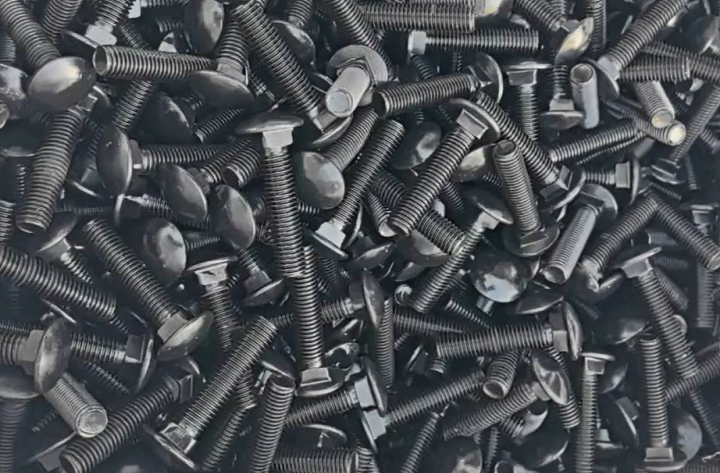
Carriage bolts (also known as round head square neck bolts) are one of the most recognizable fasteners in construction and woodworking. Their distinctive design — a smooth, dome‑shaped head combined with a square neck directly beneath it — sets them apart from standard hex bolts or lag screws. This seemingly simple geometry delivers a powerful functional advantage: the square neck embeds into wood or locks into a square hole, preventing the bolt from rotating when the nut is tightened. No wrench on the bolt head is needed, making installation quick and one‑handed.
Below we explore the most common applications where carriage bolts excel, and why they remain a preferred choice for engineers, builders, and DIY enthusiasts alike.
Timber Construction & Post‑and‑Beam Structures
In wooden construction, carriage bolts are a go‑to fastener for joining heavy timbers. They are frequently used in:
-
Beam‑to‑beam connections – securing purlins, rafters, and ridge beams.
-
Post‑to‑beam joints – connecting vertical posts to horizontal beams in pergolas, gazebos, and timber‑frame houses.
-
Column bases – anchoring wooden columns to concrete or steel footings (often combined with a washer and nut on the hidden side).
Why carriage bolts work so well here: The round head sits nearly flush with the wood surface, reducing the risk of snagging or injury. The square neck embeds into the wood fibre as the nut is tightened, gripping the material so you only need one tool – a wrench on the nut side. This is a huge time‑saver when working overhead or in tight spaces.
Outdoor Structures: Fences, Decks, Bridges & Park Furniture
Outdoor environments demand fasteners that resist loosening under vibration and weather changes, while maintaining a clean appearance. Carriage bolts are a classic choice for:
-
Wooden fences – attaching rails to posts, and securing gate hinges.
-
Decks and boardwalks – fastening ledger boards, joist hangers, and railing posts.
-
Timber bridges (pedestrian) – connecting cross‑beams and stringers.
-
Park benches and picnic tables – assembling slats to frames and legs.
Advantages in outdoor use: Stainless steel or hot‑dip galvanized carriage bolts offer excellent corrosion resistance. The smooth head does not collect water or debris, and the single‑side tightening makes assembly fast even when the back side is hidden behind a fascia board.
Furniture Assembly
While many people think of pocket screws or dowels for furniture, carriage bolts are the hidden heroes of knock‑down (RTA) furniture, heavy wooden pieces, and children’s toys.
Typical applications include:
-
Bed frames – joining headboards, footboards, and side rails.
-
Table legs – attaching legs to aprons or table tops.
-
Wooden chairs and benches – fixing arms and stretchers.
-
Children’s playsets and toy boxes – creating strong, wobble‑free joints.
Why furniture makers choose carriage bolts: The round head is child‑friendly (no sharp corners) and gives a classic, finished look. The square neck prevents spinning during assembly – a major advantage when the nut is in a recess or difficult to reach. For flat‑pack furniture, carriage bolts allow repeated disassembly without damaging the wood.
Machinery & Equipment Connections
Beyond wood, carriage bolts are also used in light‑duty metal‑to‑metal or metal‑to‑wood assemblies in industrial and agricultural equipment.
Common examples:
-
Agricultural machinery – attaching wear plates, skids, and guards on planters, cultivators, and mowers.
-
Conveyor systems – securing belt scrapers, guide rails, and inspection covers.
-
Material handling equipment – fixing caster brackets, dock bumpers, and lift truck attachments.
-
Power tools and workbenches – mounting vises, drill presses, or jigs to wooden worktops.
Benefit in mechanical applications: The square neck performs best when seated in a matching square hole punched or broached into the metal component. In a tight‑fitting round hole, the corners of the square neck can provide limited anti‑rotation resistance, but a square hole is always recommended for critical metal‑to‑metal connections. The low‑profile head avoids interference with moving parts, and the fastener can be easily replaced without special tools.
Note on similar fasteners: For applications where a square hole is impractical, ribbed neck carriage bolts (with longitudinal serrations under the head) are an alternative designed specifically for use in round holes in wood or soft metal.
Key Advantages of Carriage Bolts – Summary
| Feature | Benefit |
|---|---|
| Smooth, dome‑shaped head | Clean appearance; does not snag clothing, rope, or fabric; safe for playground equipment |
| Square neck under head | Anti‑rotation design – embeds into wood or locks into a square hole; eliminates need for a second wrench |
| One‑side installation | Ideal for blind holes or when the back of the joint is inaccessible |
| Wide material compatibility | Works in wood, soft metal, plastic, and composite materials |
| Reusable | Can be removed and reinstalled without losing the anti‑rotation feature |
| Available in corrosion‑resistant materials | Stainless steel (304/316) and hot‑dip galvanized options for outdoor and marine environments |
Common Standards for Carriage Bolts
| Standard | Description |
|---|---|
| ASME B18.5 | Round Head Square Neck Bolts (Inch Series) – dimensions, tolerances, and mechanical properties |
| DIN 603 | Mushroom Head Square Neck Bolts (Metric) – widely used in Europe and internationally |
| GB/T 14 | Large Mushroom Head Square Neck Bolts – Chinese national standard |
| ISO 8677 | Cup Head Square Neck Bolts with Large Head – international standard |
Final Thoughts
Whether you are building a timber frame, repairing a wooden bridge, assembling children’s furniture, or maintaining farm equipment, carriage bolts offer a simple yet highly effective fastening solution. Their unique square‑neck + round‑head design provides one‑wrench installation, a snag‑free finish, and reliable vibration resistance.
When you choose carriage bolts for your next project, you are not just buying a fastener – you are buying ease of assembly, long‑term durability, and a professional appearance.

 No products in the cart.