Zinc-Nickel Plating for Fasteners: The Premium Choice for Extreme Corrosion Protection

When standard zinc plating isn’t enough for some fasteners — but you need a plated finish (not a coating) — zinc-nickel (Zn-Ni) is the answer. It delivers exceptional corrosion resistance, often reaching 1,000+ hours in salt spray testing, while offering better hardness, heat tolerance, and hydrogen embrittlement control than conventional electroplating. For automotive, aerospace, and other demanding industries, zinc-nickel has…
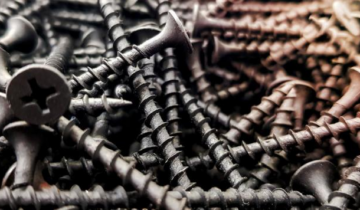
Phosphating for Fasteners: The Cost-Effective Solution for Lubrication and Paint Base

When you need a fastener finish that won‘t break the bank, plays well with paint, and gives you consistent torque control, phosphate coating (often called phosphating) is often the answer. Unlike zinc plating (which deposits metal) or black oxide (which simply discolors the surface), phosphating creates a crystalline conversion layer that chemically bonds to the steel. It’s not the most corrosion-resistant finish on the market, but for…

High-Tensile Bolts (8.8 / 10.9 / 12.9): A Complete Comparison

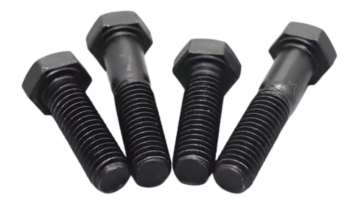
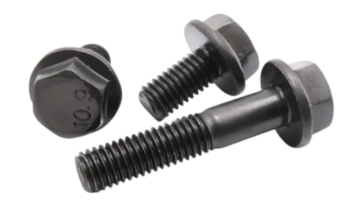
When engineers search for high-strength bolts or high-tensile bolts, they typically mean metric property classes 8.8, 10.9, and 12.9 — the three most common grades of quenched and tempered steel bolts defined by ISO 898-1. Choosing the right grade can mean the difference between a secure, long-lasting joint and a sudden, catastrophic failure. This article provides a side-by-side comparison of Class 8.8, Class 10.9, and…

Class 12.9 Bolts (Grade 12.9): Mechanical Properties, Specs & Applications

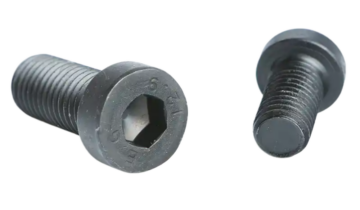
When engineers need the absolute maximum strength from a metric fastener — without increasing bolt diameter — they turn to Class 12.9 bolts. These ultra-high-strength fasteners represent the highest commonly available property class in ISO 898-1, delivering 1,200 MPa tensile strength and 1,080 MPa yield strength. They are the specialists of the fastener world: not for everyday use, but indispensable when…

Class 10.9 Bolts (Grade 10.9): Mechanical Properties, Specs & Applications

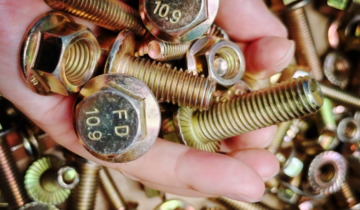
When Class 8.8 bolts reach their strength limit, engineers turn to Class 10.9 bolts. These high-strength metric fasteners represent the next tier in ISO 898-1 property classes — delivering 25% higher tensile strength than 8.8 and forming the backbone of automotive powertrains, structural steel connections, and heavy machinery. But what exactly does “Class 10.9” mean? How much stronger is it than…

Class 8.8 Bolts (Grade 8.8): Mechanical Properties, Specs & Applications

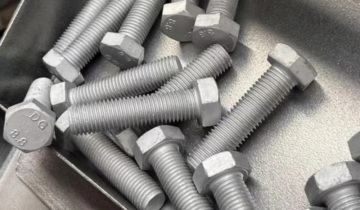
When engineers and procurement professionals search for Class 8.8 bolts — also widely known as Grade 8.8 bolts — they are looking for a reliable, cost‑effective metric fastener. Both terms refer to the same ISO strength specification (ISO 898‑1). This guide covers everything you need to know about this most widely used metric bolt grade, whether you call it Class 8.8 or Grade 8.8.…

A2-70 vs. A4-70 vs. A4-80: A Comparison of Stainless Steel Fastener Grades

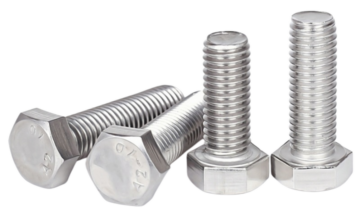
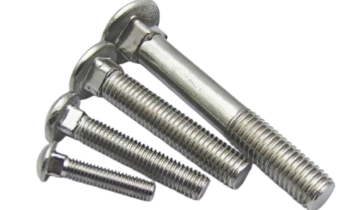
When you specify stainless steel fasteners, you’ll encounter three designations more often than any others: A2-70, A4-70, and A4-80. They look similar. They all come from austenitic stainless steel families. But the differences between them—in corrosion resistance, strength, and cost—can make or break a bolted connection in marine environments, chemical plants, or structural applications. This article provides a complete side‑by‑side comparison of these…

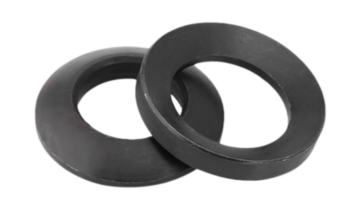
Spherical / Conical Washer and Disc Spring Size Chart – GB 849 / 850 & DIN 6796 / DIN EN 16983 (A/B/C) Dimensions

 Washer with Ball Face Size Chart – GB 849 Dimensions Washer with Cone Face Size Chart – GB 850 Dimensions Conical Spring Washer Size Chart – DIN 6796 Dimensions Disc Spring Size Chart – DIN EN 16983 (formerly DIN 2093) Belleville Washer Dimensions – Series A Disc Spring Size Chart – DIN EN 16983 (formerly DIN 2093) Belleville Washer Dimensions…

Close
Close
Sign in
Close
Cart (0)

No products in the cart. No products in the cart.